



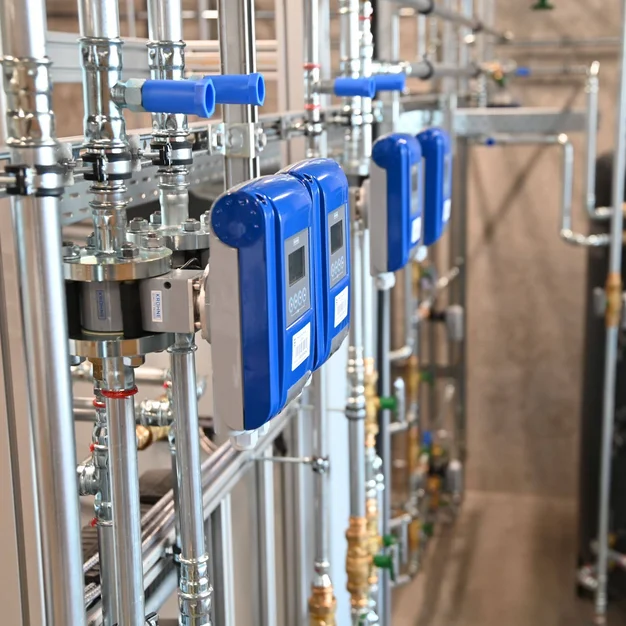
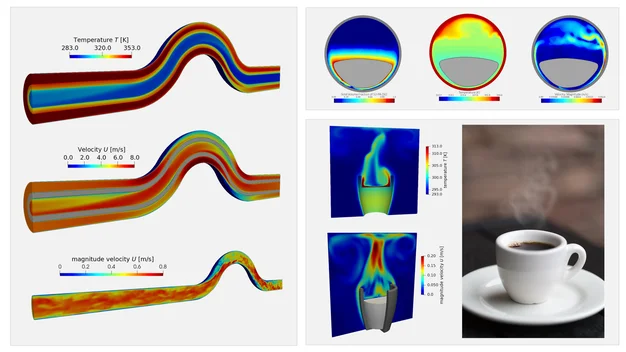
Numerical simulations are increasingly being used to predict flow behavior in the natural and engineering sciences. Computational Fluid Dynamics (CFD) are a key tool in research for determining complex fluid flow problems. They enable more cost-effective predictions of product behaviour, can reduce the experimental effort for new research results and thus also contribute to an energetic optimization of products.
Experimental investigations are not always possible if, for example, hot or chemically aggressive fluids are used or if flow sensors would significantly falsify the results. Numerical methods enable faster and more reliable variant studies.
In many branches of industry (automotive engineering, process engineering, mechanical engineering, energy technology), CFD is now the basis of modern development processes. The use of open source calculation software such as OpenFOAM has also become increasingly important in research and industry in recent years. Reliable results require a sound knowledge of numerical and physical methods.
CFD is used to support research in many areas.
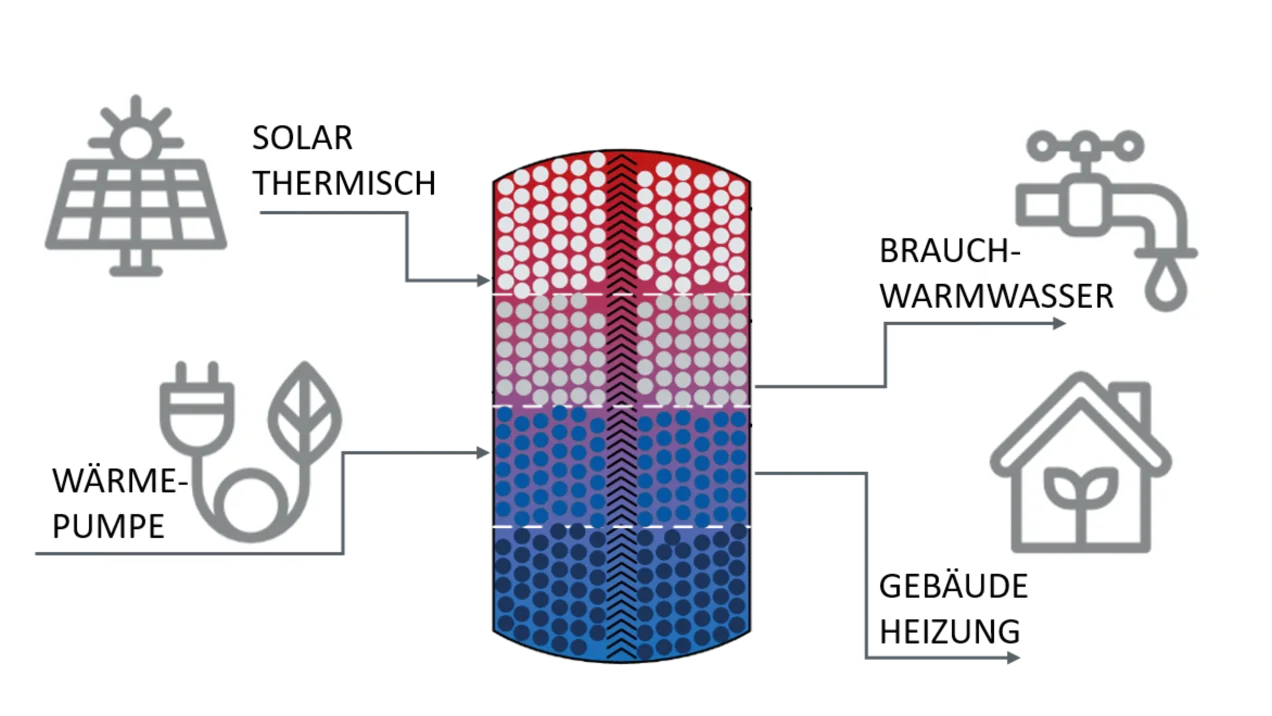
Due to the increasing demand for energy and the associated need to increase efficiency, new or improved methods are required to store thermal energy efficiently. As of 2019(source), 50% of global energy demand for heating and cooling is generated in industry and the building sector, and the same sector is responsible for 40% of global greenhouse gas emissions. In both cases, there is potential for savings and optimization through more efficient thermal storage systems.
The aim of current research is to develop a hybrid thermal storage system that has more storage capacity per volume by using latent and sensible heat and minimizes exergetic losses in the storage system through thermal stratification. For this purpose
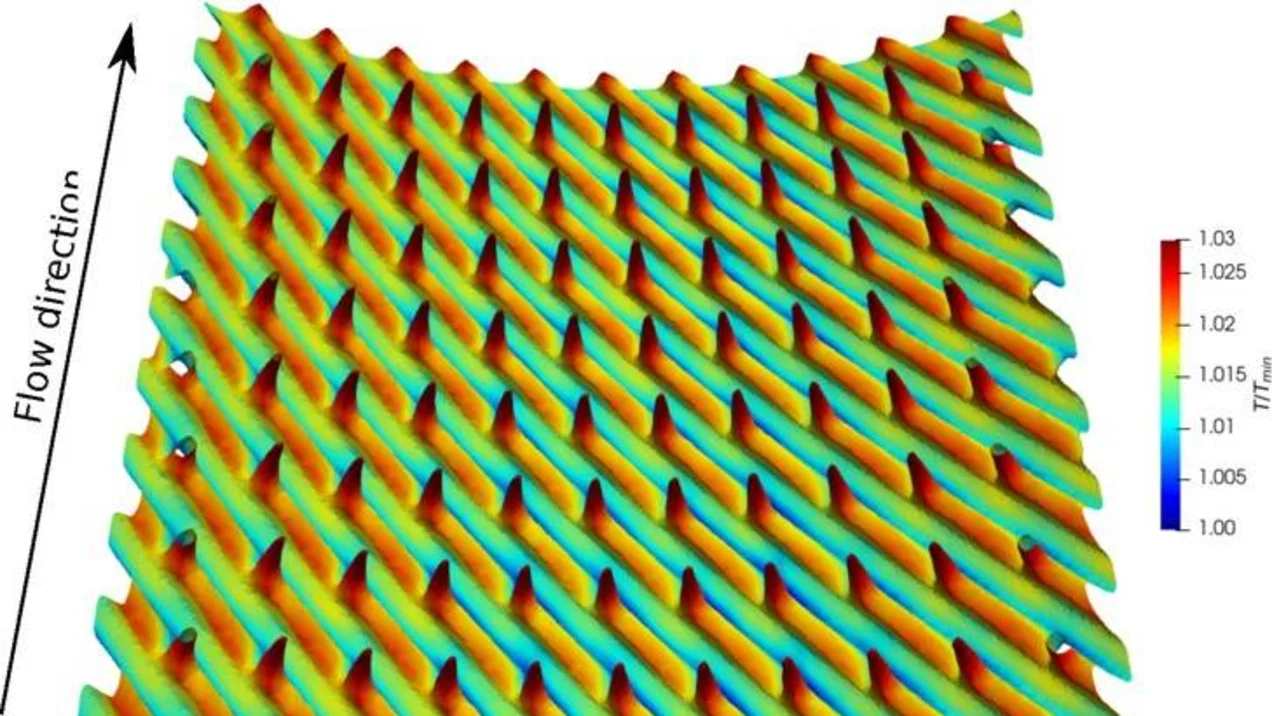
Heat exchangers play an essential role in many branches of industry. A more efficient design of heat exchangers offers great potential for energy savings and a reduction in CO2 emissions during operation.
The aim of research is to increase turbulent heat transfer and maximize the heat transfer surface. These goals are being pursued in current research through
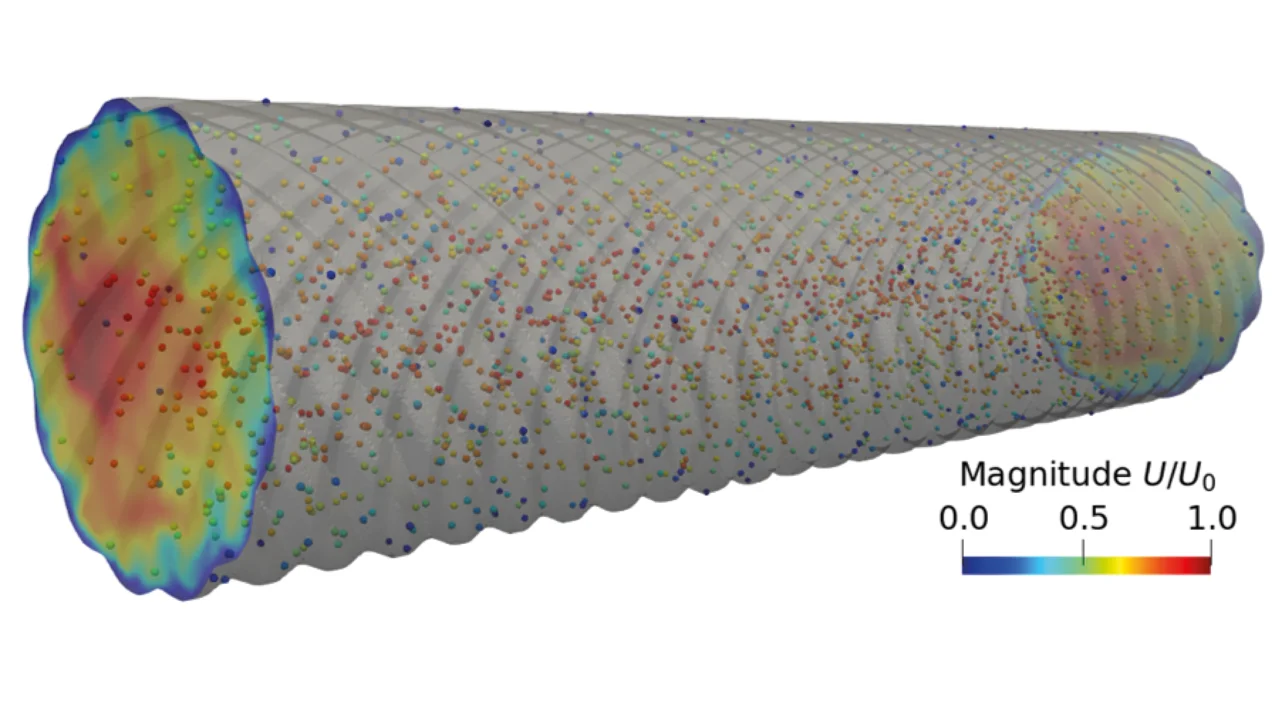
In heat exchangers, particles are deposited (fouling) over the course of several hours of operation. Previous investigations of solid deposits on heat exchangers were mostly experimental and numerical investigations were hardly available, since
The aim of the research is to evaluate differently structured pipes with regard to particle deposition using a numerical method. These goals are pursued in the current research by:
Project manager: Prof. Dr.-Ing. Peter Renze
Project duration: 01.08.2018 - 30.04.2022
Funded by: Federal Government - BMBF
Project description:
Heat transfer plays an essential role in every thermal energy process. Improving heat transfer in appliances can increase their efficiency and reduce resource consumption. However, product development in this sector traditionally relies on empirical knowledge and experimentation, which results in long development cycles and makes optimization difficult. This project aims to use modern simulation methods to develop new methods for intensifying heat transfer by simultaneously considering the manufacturing process and product properties. University expertise from the fields of simulative production technology and energy technology will be combined for this purpose. In order to guarantee application-oriented research, a partner from Ulm will be involved as an industrial project partner. This partner provides the application example, production and testing capacities as well as cash.
Project manager: Prof. Dr.-Ing. Mathias Niebergall, Prof. Dr.-Ing. Peter Renze
Project duration: 01.10.2018 - 31.01.2021
Funded by: Federal Government - BMWi
Program name: ZIM
Project description:
For decades, hydraulic drive technology has been characterized by increasing performance and pressure requirements with reduced installation space. In order to meet future requirements, a control module with a compact, highly integrated valve technology structure is being developed as part of this project proposal, which enables safe hydraulic power control of a drive above 500 bar. The control module is to consist of a modular hydromechanical structure with adapted actuator technology, pilot and main control with separate control edges, as well as customized on-board electronics (OBE). The project objective is a market-oriented control module that meets the highest performance requirements and offers safe and efficient functional networking of several hydraulic consumers by means of intelligent control / regulation. This will create the control technology basis for energy-efficient operation of hydraulic power drives, including hydraulic regeneration or recuperation. The project is supported by CFD calculations.
Akermann, Kevin; Renze, Peter:
Numerical study of turbulent heat transfer and particle deposition in enhanced pipes with helical roughness,
in: International Journal of Multiphase Flow, vol. 176, ScienceDirect, 2024, pages 104827 (13 pages).
DOI: doi.org/10.1016/j.ijmultiphaseflow.2024.104827
ISSN: 0301-9322
Jäger, Sarah; Pabst, Valerie; Renze, Peter:
Multizone Modeling for Hybrid Thermal Energy Storage,
in: Energies, 17(12), 2854, MDPI, 2024, pages 21.
DOI: doi.org/10.3390/en17122854
ISSN: 1996-1073
Kügele, Simon; Mathlouthi, Gino Omar; Renze, Peter; Dietl, Jochen; Grützner,Thomas:
Turbulent heat transfer in pipes with increased roughness through shavings of helical ribs,
in: International Journal of Heat and Mass Transfer, Vol. 210, Elsevier, Elsevier, 2023, 124159.
DOI: doi.org/10.1016/j.ijheatmasstransfer.2023.124159
ISSN: 1879-2189 (online), 0017-9310 (print)
Mathlouthi, Gino; Kügele, Simon; Elsayed, Fatmaalzahraa; Voß, Ralf; Renze, Peter; Kaufeld, Michael; Grützner, Thomas:
Wettability Prediction for 3D-Printed Surfaces Using Reverse Engineering and Computational Fluid Dynamics Simulations,
in: Industrial & Engineering Chemistry Research, Volume 62, Issue 3, American Chemical Society for applied Chemistry and Chemical Engineering, ACS Publications, 2023, Pages 1627-1635.
DOI: 10.1021/acs.iecr.2c03805
ISSN: 1520-5045
Akermann, Kevin; Renze, Peter; Schröder, Wolfgang:
Large-eddy simulation for solid particle transport and deposition in a helically rib-roughened pipe using an Euler-Lagrange approach,
in: Chemical Engineering Science, Volume 253, Elsevier, 2022, Pages 117557.
DOI: doi.org/10.1016/j.ces.2022.117557
ISSN: 0009-2509
Kügele, Simon; Mathlouthi, Gino Omar; Renze, Peter; Grützner, Thomas:
Numerical Simulation of Flow and Heat Transfer of a Discontinuous Single Started Helically Ribbed Pipe,
in: Energies, Volume 15(19), MDPI, 2022, pages 17 (Art. No.: 7096).
DOI: doi.org/10.3390/en15197096
ISSN 1996-1073
Kügele, Simon; Renze, Peter; Dietl, Jochen; Grützner, Thomas:
Investigation of heat transfer and pressure drop for a multiple-started ribbed pipe using large-eddy simulation,
in: AIChE Journal, Volume 68(11), American Institute of Chemical Engineers, 2022, pages 1-12, e17808.
DOI: doi.org/10.1002/aic.17808
ISSN: 0001-1541
Pabst, Valerie; Güttel, Robert; Renze, Peter:
Experimental and Numerical Investigation of the Melting of a Spherical Encapsulated Phase Change Material With Variable Material Data,
in: Atlantis Highlights in Engineering, volume 6, 14th International Renewable Energy Storage Conference 2020 (IRES 2020), Zheng Zheng, Zhiyu Xi, Atlantis Press, 2021, pages 8.
DOI: 10.2991/ahe.k.210202.032
ISSN: 2589-4943 / ISBN:978-94-6239-327-1
Akermann, K.; Renze, P.; Dietl, J.; Schröder, W.:
Large-Eddy Simulation of turbulent heat transfer in a multiple-started helically rib-roughened pipe,
in: International Journal of Heat and Mass Transfer, Vol. 154, 2020, Elsevier (ed.), Elsevier, 2020, pages 13.
DOI: 10.1016/j.ijheatmasstransfer.2020.119667
ISSN: 1879-2189
Renze, Peter; Akermann, Kevin:
Simulation of Conjugate Heat Transfer in Thermal Processes with Open Source CFD, in: ChemEngineering, 3 (2), 2019, MDPI, 2019, pages 19.
DOI: 10.3390/chemengineering3020059, ISSN: 2305-7084
Renze, P.; Simulation of flow and heat transfer in power engineering with OpenFOAM; ASIM/GI expert group meeting, March 9-10, 2017; Ulm.
Hecht, K., Krause, U., Hofinger, J., Bey, O., Nilles, M., Renze, P. ; Numerical investigation of the influence of swarm and coalescence effects on bubble flows by CFD and population balance models, ProcessNet Fachgruppentreffen Mehrphasenströmungen 2017, Dresden.
Prediction of Gas Density Effects on Bubbly Flow Hydrodynamics: New Insights through an Approach combining Population Balance Models and Computational Fluid Dynamics, K.J. Hecht, U. Krause, J. Hofinger, O. Bey, M. Nilles, P. Renze, to be submitted to AICHE Journal
Renze P, Buffo A, Marchisio DL, Vanni M. Simulation of Coalescence, Breakup, and Mass Transfer in Polydisperse Multiphase Flows. Chem. Ing. Tech. 2014;86(7):1088-1098.
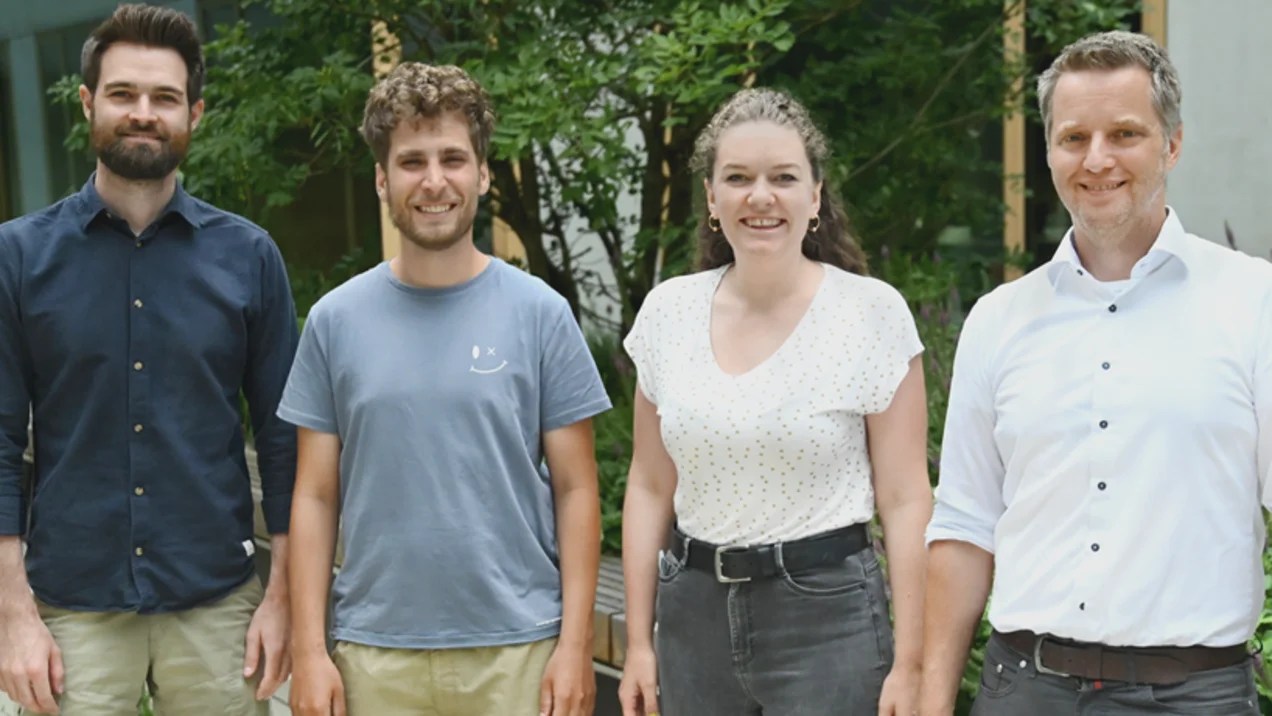
We are currently a team of four research associates. If you are interested in collaborating on joint research projects or joining our team, please feel free to contact us.
You can find areas of interest in our profile sections:
There are always current topics available for research-based project work or theses. Please contact us!