
At THU, teaching and further education in the field of start-ups focuses on application-oriented and practical skills. Whether integrated into compulsory modules, offered as optional subjects or as additional qualifications, our talented students have a wide range of opportunities to learn entrepreneurial thinking and action in an interdisciplinary, practical and innovation-oriented way.
THU and the THU Start-up Centre have developed a broad and innovative range of educational programmes for you in the field of entrepreneurship and the promotion of an entrepreneurial spirit. The roadmap below outlines the teaching and further education programmes we have tailored to your needs. Please get in touch; we’ll be happy to help.
Have you ever wondered how an idea actually turns into a business? In the elective course “Practical Aspects of Starting a Business,” you’ll gain a structured overview of how startup projects are implemented in practice during the early stages. The focus is primarily on providing guidance in the most important areas of starting a business—from legal and financial issues to strategic decisions.
Instead of a traditional exam, you’ll work on short weekly case studies throughout the semester, ideally based on your own startup idea. The module is designed for anyone who is curious about entrepreneurship, wants to develop their own idea further, or simply wants to understand how startups work in practice. The course covers key aspects of starting a business—from legal and financial fundamentals to product development, market entry, and organization, as well as practical perspectives from founders and topics such as sustainability, intellectual property, and crisis management.
Registration deadline: March 20, 2026 (via Selma)
Location & Time: THU Albert-Einstein-Allee Campus Room Q123, every Monday from 5:25–8:30 p.m.
Language: English
Instructors: Catherine Adelmann & Lena Schmid
From the basics and specialized knowledge to role models who have started their own businesses (sessions 2 and 3), you’ll find a diverse range of topics in this winter’s lecture series. You’re also welcome to attend individual sessions that interest you. In addition to lectures, the sessions include hands-on activities where you can immediately put your ideas into practice, with plenty of time to ask all your questions.
For the students among you: if you attend 80% of the sessions and write a reflection report, you can have the course listed on your transcript as an ASQ or elective module. Please contact Catherine Adelmann at Catherine.Adelmann(at)thu.de if you’d like to participate.
| Date | Topic |
|---|---|
| October 12, 2026 | Steps to Founding & Legal Framework |
| October 19, 2026 | Vera Lyko: Startup Idea—Fall in Love with the Problem What problem is worth building a startup around? Join Vera Lyko for “Startup Idea—Fall in Love with the Problem.” Explore how understanding real challenges and people’s needs can be the starting point for a compelling startup idea. |
| October 26, 2026 | Market Entry, Sales Strategies & Marketing |
| November 2, 2026 | Financial Planning & Controlling for Startups |
| November 9, 2026 | Lena Brenner: “Founder Insights”: Your Entrepreneurial Skills: Founding, Employment & Personal Growth How can entrepreneurial skills shape your career and personal growth? Join Lena Brenner for “Founder Insights – Your Entrepreneurial Skills: Founding, Employment & Personal Growth.” Drawing on her experience in both the corporate world and startups, Lena explores how these skills can help you launch a venture, thrive as an employee, and grow personally. |
| November 23, 2026 | Investment & Shareholder Agreements |
| November 30, 2026 | Sustainability as a Strategic Factor |
| December 7, 2026 | Business Angel Insights -> Description to follow |
| December 14, 2026 | Product & Production |
| December 21, 2026 | HR & Organization |
| January 11, 2027 | Failure, Crisis & Resilience |
| January 18, 2027 | Manuel Masenko: “Founder Insights”: Behind the Scenes: Product, Sales & Hard-Earned Lessons What does life as a founder really look like? Join Manuel Masenko for “Founder Insights – Behind the Scenes: Product, Sales & Hard-Earned Lessons.” Discover the highs and lows of building a startup—from developing a product and winning customers to navigating setbacks and learning along the way. |
Entrepreneurial thinking and action are becoming increasingly important in nearly all professional fields—regardless of whether you want to start your own startup, take over an existing company, or drive innovation within a company.
In the elective course “Entrepreneurship,” you’ll gain a comprehensive insight into the various facets of entrepreneurship. You’ll learn about different forms of entrepreneurship, including startup entrepreneurship, corporate entrepreneurship, social entrepreneurship, and business succession.
In addition, the course teaches the methodological foundations for systematically preparing entrepreneurial projects, developing business models, and transforming ideas into viable concepts. Another focus is on developing an entrepreneurial mindset that will help you recognize opportunities, tackle challenges in a solution-oriented way, and think entrepreneurially.
The course combines theory and practice: After acquiring the theoretical foundation, students directly apply what they have learned in small groups to a practical project of their own choosing. As a practical example, students may choose their own business idea or the further development of an existing idea. In doing so, students learn to apply various tools and methods for business modeling.
The course assessment consists of a presentation of the practical project and a short written paper. The module is intended for all students who wish to develop an entrepreneurial mindset, systematically refine innovative ideas, and learn practical methods for future startup or innovation projects.
The "Gründergarage" elective was created as part of the Accelerate!SÜD joint project. It has been organized by StartupSÜD since 2021.
In the Gründergarage, students are given the opportunity to develop an idea into a business model in block courses. The event consists of a two-day boot camp, a two-day thrill camp and a one-day closing event with a pitch on the business ideas.
The organizing team, consisting of representatives from Ulm University of Applied Sciences, Biberach University of Applied Sciences, Neu-Ulm University of Applied Sciences and Ulm University, accompanies the participants from the development of an idea, through the creation of a prototype, to the development of viable business models with content-related and methodological input. In addition to getting to know the design thinking method and developing a business model canvas, students also learn how to draw up a business plan.
A moderator actively involves the students in the course and interdisciplinary cooperation is trained through practical work in cross-university teams of three to five students. At the end, students are given the opportunity to present their business ideas to a jury of business representatives in a pitch.
In addition, the participants can use the infrastructure of the network partners and are supported in their networking with the local start-up scene.
Last year's motto was "Impact". For example, concepts for renting out co-working spaces in rural areas and apps that show which products are sustainably produced or regional or promote sporting activities within the company were developed. There are and were no limits to creativity.
Founder garage profile
Registration
Registration deadline: - (via Selma)
You can send further questions to startup(at)thu.de at any time.
While studying at THU, all students have the opportunity to gain additional qualifications beyond the required courses. The THU Startup Center specifically supports students in obtaining additional qualifications in the field of business administration:
The Entrepreneurship ZQ provides skills for starting a business, as well as for leadership roles in established companies.
With the International Business ZQ, you lay the foundation for roles in internationally active companies, such as a position in international sales.
As part of a supplementary qualification, students complete five modules from four or five subject groups. The supplementary qualifications are generally open to students in all degree programs at THU.
On the “Additional Qualifications” page of the Institute for Management and Entrepreneurship, you’ll find information about the modules and subject groups, instructions for registration and credit recognition, as well as details on other additional qualifications.
TRIZ is a kind of methodological toolbox for innovation and systematic problem solving. In contrast to rather unstructured creativity methods such as brainstorming, TRIZ first systematically analyzes given problems and then solves them in an innovative and targeted manner.
TRIZ methods can be used in all industries and offer in-depth systematic support for product and process development, designing new business models, securing and circumventing patents and long-term prediction of technological development patterns, among other things.
This is a compulsory module for students on the Digital Media degree program.
Building on the knowledge acquired in the field of interaction and user experience design, digital media students learn and test the holistic conception of networked services using modern methods of innovation development (including design thinking / design sprints / HCD) and business modeling (including JTBD, value proposition and business model canvas, pitch deck development).
After successfully completing the module, students can...
design (primarily) digital services holistically across various points of contact
evaluate and consider key economic and strategic aspects in order to design meaningful digital services
present innovative concepts in an easily understandable and convincing way
The Snacks & Bites teaser format consists of small bites on the topic of start-ups and entrepreneurship that you will encounter during your studies. Be it through entertaining lectures and presentations in your lectures or short videos on specific start-up topics.
These include, among others:
& much more. Let us surprise you!
THU is a partner university in the "Makers of Tomorrow" project, an online course on entrepreneurship for students at German-speaking universities, which is available to you free of charge.
The course consists of a total of 10 modules with 10 start-up stories from prominent founders in Germany and Silicon Valley. In addition to exclusive insights into the highs and lows of life as a founder, there are also short tasks in the modules to get a first impression of the actual "doing". The course is open to all subjects, all degrees and all semesters - explicitly no prior knowledge required!
Those who have completed all 10 modules including the tasks will receive a certificate and exclusive access to an online community of MoT Alumni, where there will be access to further networks and events.
In addition, there will be a Germany-wide, inter-university lecture series as part of the project, which you can attend online and in which founders will report live on their everyday lives.
If you would like to attend the course, you can simply register here and then log in with the access key. To receive the access key, write an informal e-mail to startup(at)thu.de.
If you have any questions, please contact the THU Startup Center at startup(at)thu.de .
We are very pleased to be able to offer you this additional Germany-wide service and are happy to support all start-up ideas beyond this.
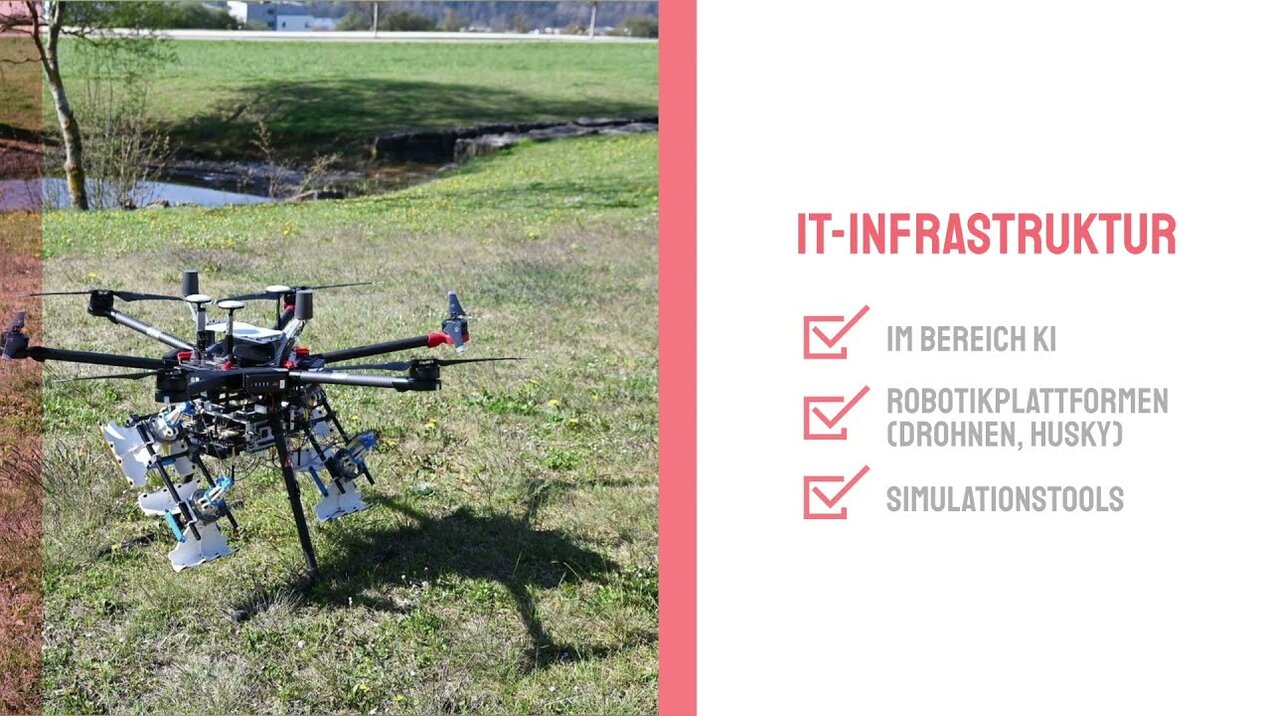
The THU Startup Center and the StartupSÜD joint project support innovative ideas and start-up concepts with an excellently equipped infrastructure consisting of laboratories, workshops, equipment, IT and experts from various fields.
THU also has co-working spaces and start-up rooms.
And if we don't have the right infrastructure on site, you can contact us at any time, e.g. by emailing startup(at)thu.de.