
At a glance
| Advanced practice | |
|---|---|
| Content | Study + additional practice |
| Standard period of study | 7 semesters |
| Degree | Bachelor of Engineering (B. Eng.) |
| Start | winter and summer semester |
Procedure
Environmental technology - in-depth practice
You can begin the Environmental Engineering program, which features in-depth practical training, in either the winter or summer semester. The Environmental Engineering program lasts seven semesters and focuses on technologies for keeping water, air, and soil clean, as well as climate protection.
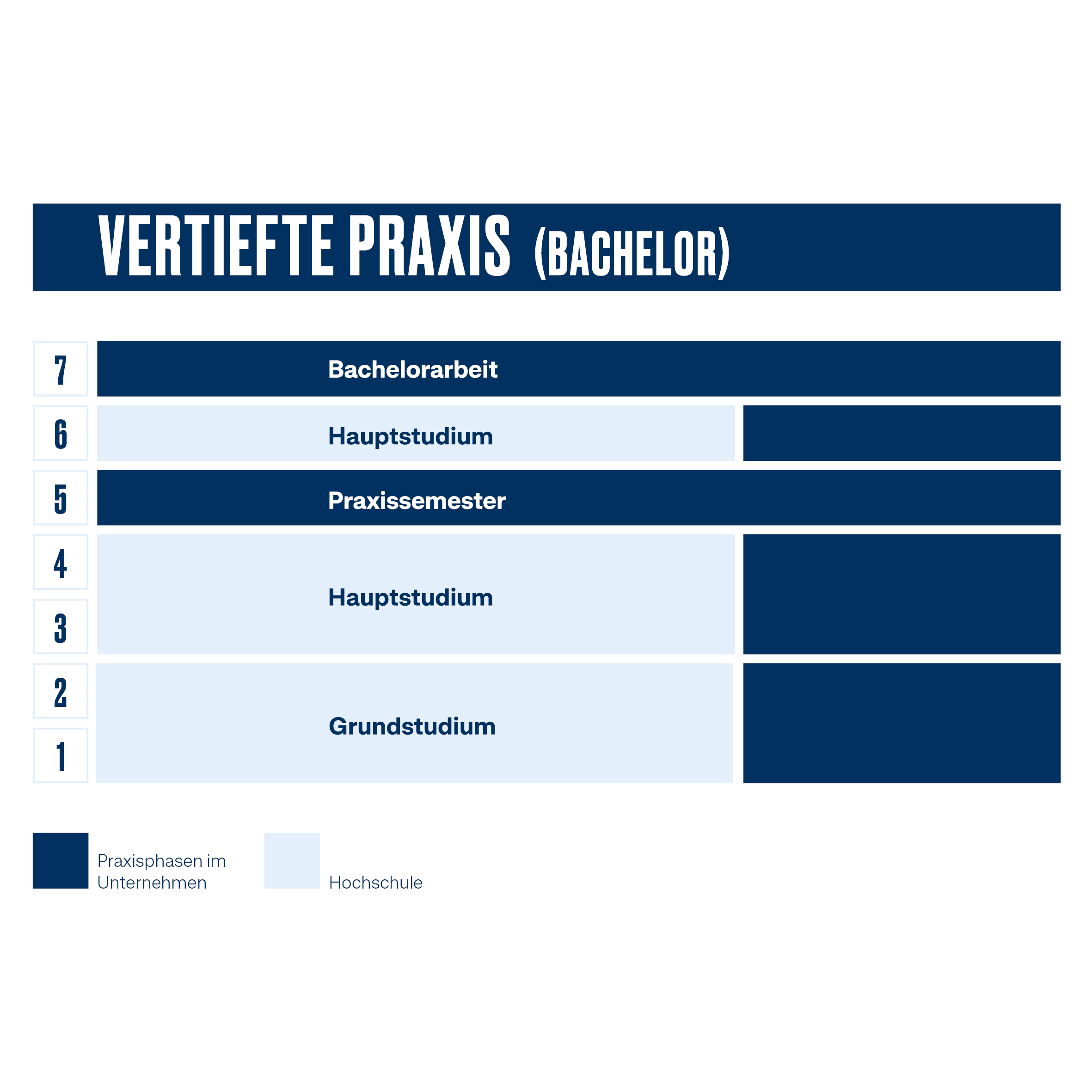
If you’ve already signed your contract before the start of the program, you’ll first get to know your company during a short orientation phase lasting two to four weeks. Afterward, your studies will begin immediately at the university with the first lectures.
As the program progresses, theoretical and practical phases alternate: During lecture and exam periods, you’ll study at THU; during breaks from classes, you’ll gain valuable practical experience at the company. During the introductory phase, you’ll acquire fundamental knowledge in mathematics, physics, and chemistry, which is necessary for understanding environmental engineering processes. Courses such as “Engineering Mechanics” and “Computer Science” lay the foundation for analyzing and solving technical problems. The advanced study phase introduces you to specific topics in environmental engineering, including thermodynamics, water treatment, and waste management. You’ll also deepen your knowledge through required-elective modules. You’ll complete your internship semester and your bachelor’s thesis directly at your partner company.