
At a glance
| Ulm Model | In-depth Practice | |
|---|---|---|
| Content | Study + training | Study + additional practice |
| Standard period of study | 9 semesters | 7 semesters |
| Degree | Bachelor of Engineering (B. Eng.) + vocational qualification | Bachelor of Engineering (B. Eng.) |
| Start | 01 September | winter & summer semester |
Procedure
Energy technology - Ulm model
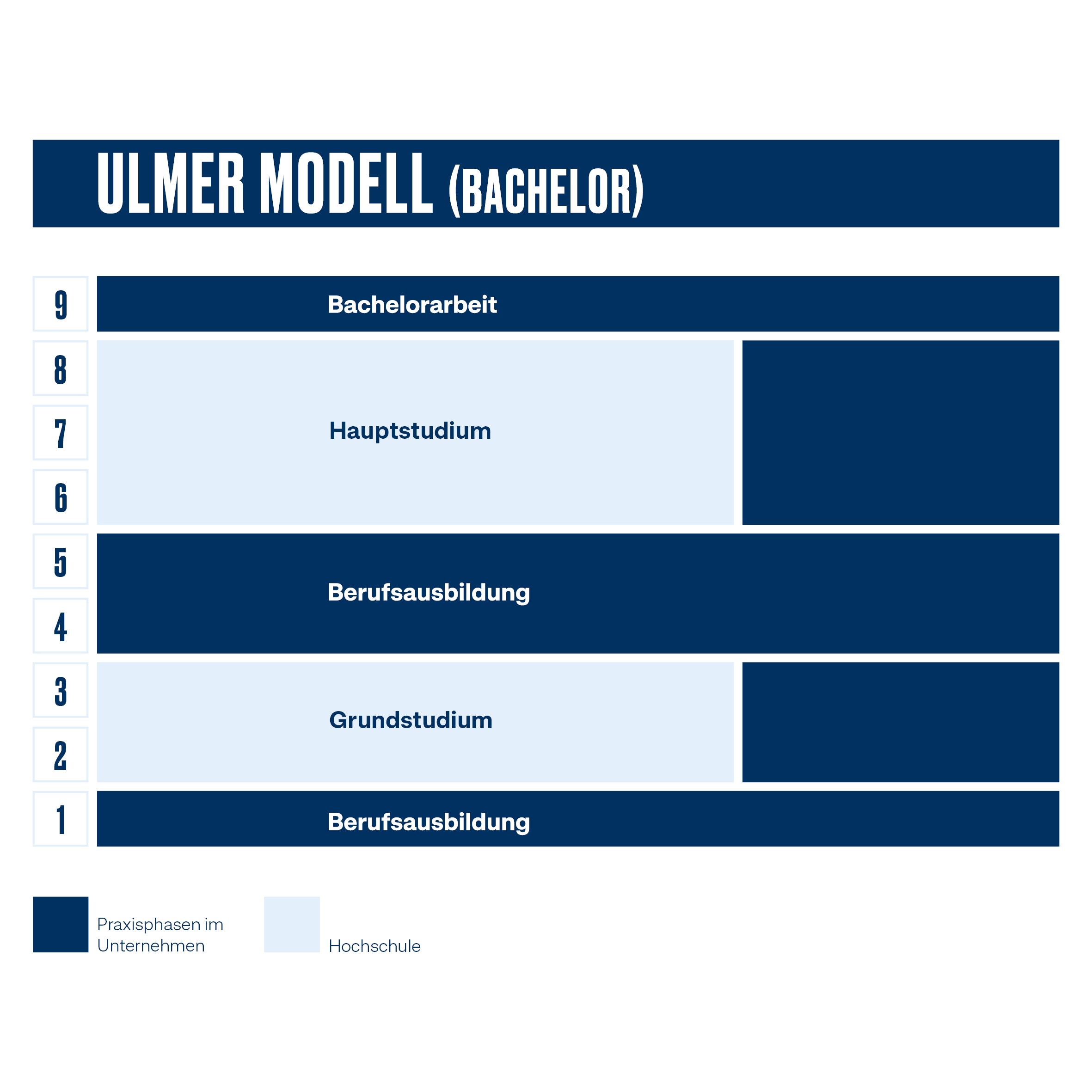
The dual degree program based on the Ulm model in the Energy Engineering program at Ulm University of Applied Sciences begins every year on September 1 and lasts a total of 4.5 years.
You’ll spend the first half-year at the company, where you’ll begin your apprenticeship. This is followed by a two-semester foundational program. Afterward, you’ll spend a year at the company, complete your apprenticeship, and gain valuable hands-on experience.
As the program progresses, theoretical and practical phases alternate. You’ll collaborate on projects in specialized departments and write your bachelor’s thesis at the company during your final semester. After 4.5 years, you’ll earn both a bachelor’s degree with the academic title Bachelor of Engineering (B.Eng.) and a recognized skilled-worker certification.
Energy technology - in-depth practice
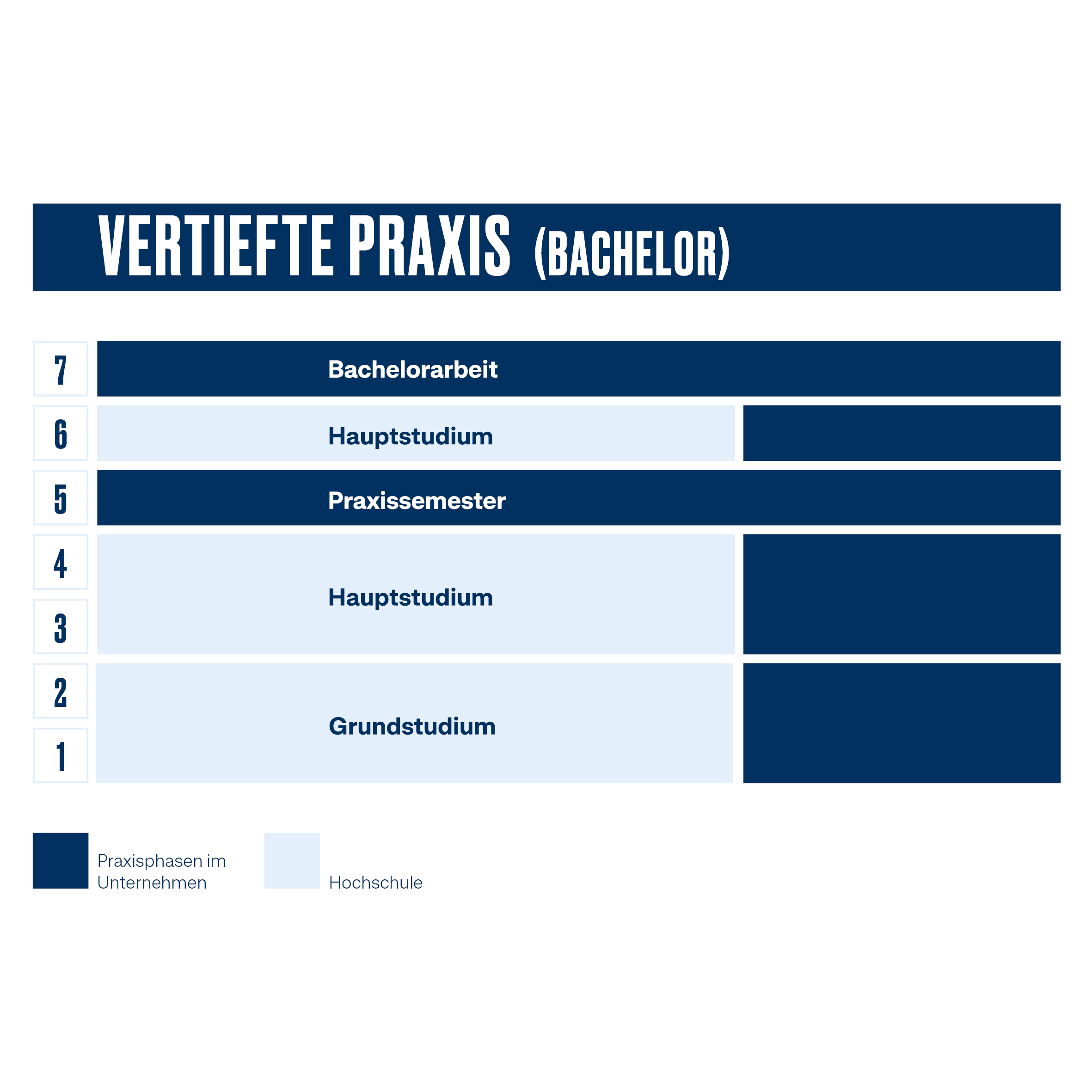
You can begin the Energy Engineering program with an in-depth practical component in either the winter or summer semester. If you have already signed your contract before the start of the program, you’ll first get to know your company during a brief orientation period of two to four weeks. Afterward, your studies will begin immediately at the university with the first lectures.
As the program progresses, theoretical and practical phases alternate: During lecture and exam periods, you’ll study at THU; during breaks from classes, you’ll gain valuable practical experience at the company. The first two semesters focus on teaching fundamental knowledge in mathematics, physics, and chemistry, which is essential for understanding technical systems.
In the 3rd and 4th semesters, you’ll be introduced to more specialized topics in energy engineering, including thermodynamics, heat transfer, and renewable energy. In the final phase of the program, you’ll deepen your knowledge through required-elective modules. By choosing specializations, you can tailor the program to your own interests and goals and refine your professional profile. You’ll complete your internship semester and your bachelor’s thesis directly at your partner company.