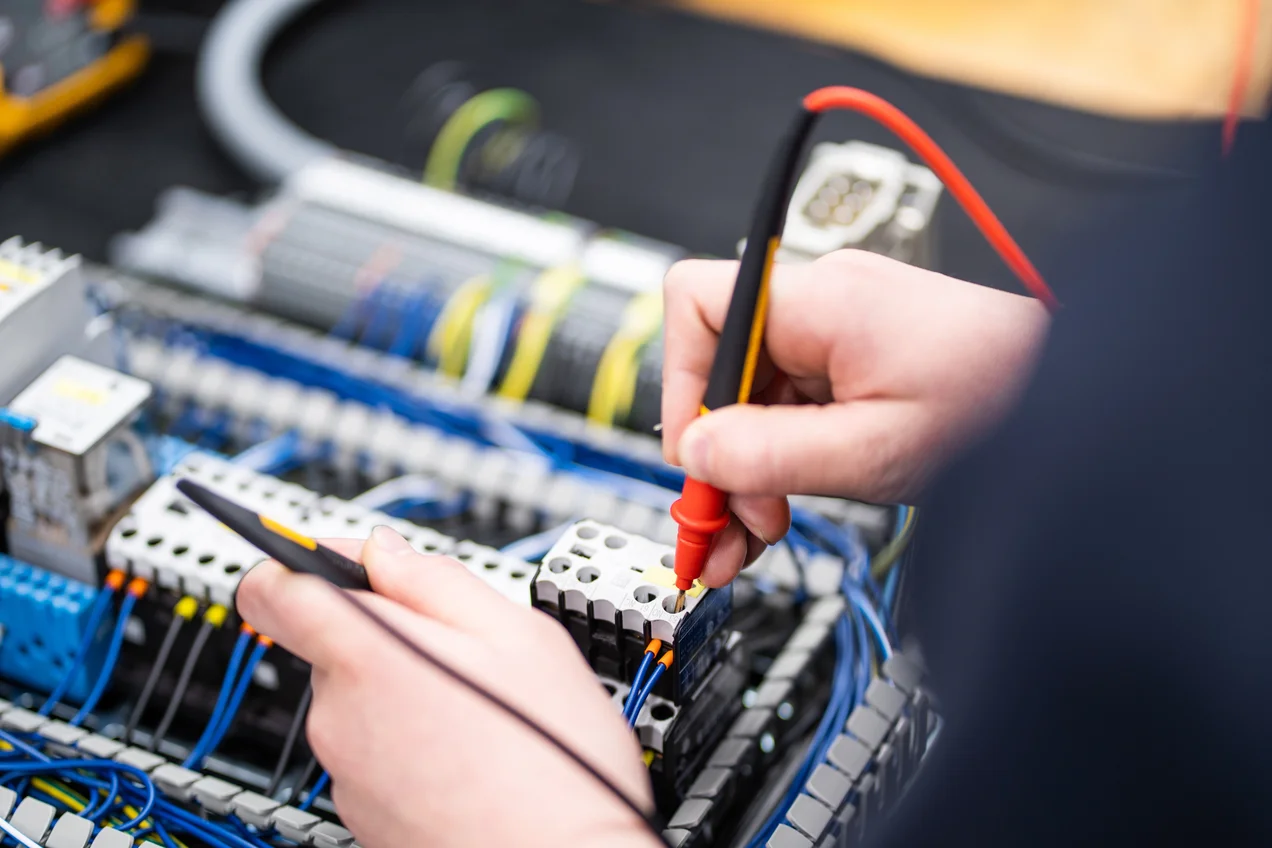

Smart, connected electronic systems shape our modern world – and would you like to help shape them? On the Bachelor’s degree programme in Electrical Engineering and Information Technology, you’ll combine technical understanding with creativity and a spirit of inquiry. Even whilst you’re studying, you’ll develop new ideas and test their implementation by tackling real-world problems from industrial practice. Alternatively, you can also complete the programme as a dual study programme with in-depth practical experience or following the Ulm model. Special admission requirements apply to the programme based on the Ulm Model. Kick-start your career now and develop the systems and components needed for society’s technical infrastructure.
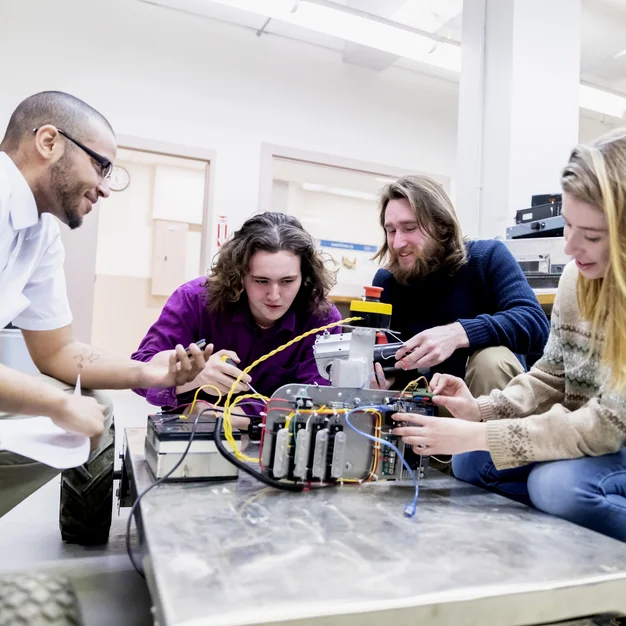
In the Bachelor’s program in Electrical Engineering and Information Technology at Ulm University of Applied Sciences, you’ll design innovative technologies and work on forward-looking solutions for a connected world.
The electrical engineering program lasts seven semesters and is divided into a foundational phase and an advanced phase. During the foundational phase (semesters 1 through 4), you will acquire the fundamental knowledge of electrical engineering. Starting in the third semester, you’ll deepen your studies by choosing two specializations, which you’ll continue to take until you graduate. This allows you to tailor your studies specifically to your interests and career goals.
Combining different areas of specialization opens up a wide range of opportunities: With specializations in vehicle systems as well as power electronics and energy technology, you’ll gain the skills needed for modern automotive engineering and electric mobility. The combination of automation, power electronics, and energy technology prepares you for roles in industrial electronics. With communication systems and high-speed electronics, you’ll deepen your knowledge of modern telecommunications and communication technology.
You will need a university entrance qualification for your studies, for example the general higher education entrance qualification (Abitur), the subject-specific higher education entrance qualification, the entrance qualification for universities of applied sciences or a comparable qualification. The electrical engineering course does not require an NC, which means that no specific grade point average is necessary. A pre-study internship is not a must, but we strongly recommend it for orientation purposes. Are you enthusiastic about math and science, think abstractly and are a strong communicator? Then this degree program is your perfect match. You can also complete it as a dual study program according to the Ulm model or with in-depth practical experience. Please note: If you want to do a dual degree, have a foreign degree or are starting a higher semester, your application process will be slightly different.
With a degree in electrical engineering and information technology, you will secure versatile and future-proof career prospects. You will develop, program and support modern electrical and automation systems and the associated software - both nationally and internationally. You will work in industrial companies, engineering and planning offices, consulting firms or in research and product development, for example. Teaching and further education also offer you exciting career opportunities. Thanks to the high practical orientation, you will benefit from excellent career prospects. Studies and practical checks confirm the high demand for graduates in electrical engineering and information technology. The Ulm region in particular offers you attractive employers from medium-sized companies and large-scale industry as well as excellent opportunities for starting your career.