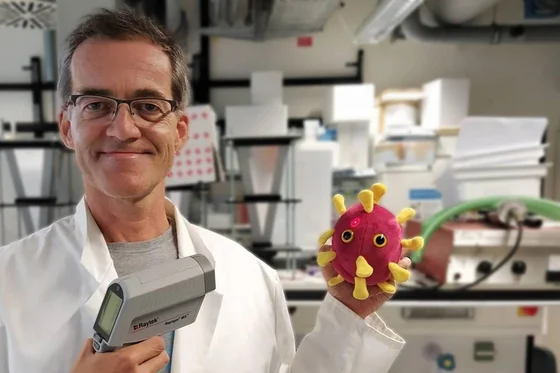

How does one become a professor at THU? What inspires our lecturers in their profession, what experiences have shaped them, and what makes their work so special?
On this page, professors at THU share personal insights into their careers, their day-to-day work and what drives them. Get to know the people behind the professorship.
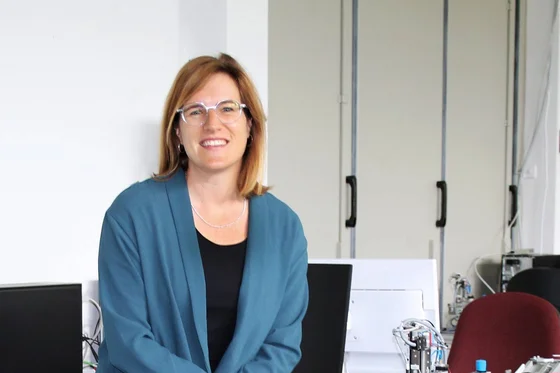
Prof. Dr.-Ing. Lisa Ollinger, born in 1983, studied electrical engineering at the Technical University of Kaiserslautern and earned her Ph.D. there in the Department of Mechanical and Process Engineering. During her doctoral studies, she worked at the German Research Center for Artificial Intelligence (DFKI) in the Innovative Factory Systems research division and subsequently in industry at Procter & Gamble.
Since 2019, Lisa Ollinger has served as a professor of production automation at the University of Ulm, where she teaches and conducts research in the faculty on the topics of control engineering, robotics, Industry 4.0, agent systems, and communication technologies. In addition to her teaching and research activities, she serves as the Dean of Studies for the master’s program “Systems Engineering & Management – Industrial Engineering.” Since 2021, she has been a member of the University Council at THU.
Question: What is your field of expertise?
Lisa Ollinger: Broadlyspeaking, it’s about “breathing life into” machines. For production processes to run automatically, machines must be able to configure themselves, and errors must be detected and resolved automatically. Automation is based on software. To optimize production processes, switch to new production programs, and produce a wide variety of products, the software must be highly agile and able to adapt quickly—ideally automatically. These are the kinds of topics we’re working on. When someone asks me what I do in my research, I always say, “Keyword: Industry 4.0—that’s where you’ll find me!”
Question: What do you love most about being a professor?
Lisa Ollinger: I think being a professor is so great because it’s so versatile! For me, the high degree of autonomy that comes with this job is something that fits my personality very well and makes me happy. The beauty of a university is that you can learn so much. For me, that’s a major reason why I love this profession so much. I’m a person with wide-ranging interests, and I think it’s wonderful that you can develop yourself in this way. I’d like to get more involved in research because that’s another passion of mine. We university professors do have a fairly heavy teaching load compared to universities, but we have many other advantages in return.
Question: What aspects of your job as a professor would you not want to do without?
Lisa Ollinger: Before my job in industry,I worked as a doctoral student at a research institute, where I was already teaching and supervising many student projects. The transition to industry was initially a very abrupt change. At Procter & Gamble, I supervised a few student projects on the corporate side. There were a few things I really missed in my industry job. In a company, you’re assigned to a project and have some freedom within that project, but it’s quite different from the academic world—it’s a completely different way of working.
Question: What advice can you give—especially to women—who are interested in a job like this?
Lisa Ollinger: I think as a woman, you think twice about it. That was the case for me 20 years ago, and I don’t think much has changed—unfortunately. I think it’s more natural to say, “I’m a young man, I’ve got my high school diploma, and I’m going to study mechanical engineering.” No one asks you if you really want to do that, or if you think you can actually do it. I think these are social structures that are deeply ingrained. I loved the appeal of being an engineer: developing things, devising creative solutions, and bringing them to life. That was a vision I wanted to pursue. I didn’t have any role models in that sense myself; no one in my family had a technical profession. My physics teacher had even advised me against studying engineering. But I was defiant enough back then to do it anyway.
Question: How did you come to the profession of professor?
Lisa Ollinger: During my career in industry, I gradually moved away from technology and took on more project management tasks. That’s when I realized I was missing it—delving into the subject matter, tinkering, learning about new technologies, and so on. At the time, I spoke with a former colleague who had already made the transition to becoming a professor. He encouraged me, and that was really important for me—getting that external push to believe in myself. My doctoral advisor also told me at one point that I would be very well-suited to working with students. When I received the appointment here at THU, he was also very happy and congratulated me. Back then, becoming a professor wasn’t really on the table yet.
Question: You have been a member of the THU University Council since August 1, 2021. How did you come to be there?
Lisa Ollinger: I was asked at the time. I had been at the university for two years by then and hadn’t yet delved into the details of the university’s administrative structures. Two colleagues approached me back then, and I have to say, it was also a compliment to me that I was nominated for it. I also saw it as a great opportunity to “get up to speed” and take a look behind the scenes at what’s happening in university politics. And, of course, to have some influence. I also see this kind of involvement in the university’s governance as necessary. I believe it’s important that we get involved to really bring the university to life. So I thought I’d give it a try, accept this position, and just dive right in—and I haven’t regretted it. The University Council is made up of internal and external members, and I find the perspective of the company representatives particularly interesting and love making new connections. They bring in very valuable different perspectives. I also see this as a way to further my education, get involved, and contribute to the university community.
Question: How can other members of the university community be motivated to get involved in university self-governance as well?
Lisa Ollinger: You just have to be open to seizing opportunities, taking the initiative, and putting out feelers a bit. Here at the university, we have the freedom to say where we’d prefer to get involved, whether it’s as a department head or as a dean. I myself have always found it very positive when I’ve proactively said what I’d like to do, such as now taking on the role of Dean of Studies for the Systems Engineering (Industrial Engineering) program. You really never run into rejection here if you take a proactive approach and talk to people. I think that’s a very positive environment. In short: Let’s go! Just reach out to people. I think you’ll be welcomed with open arms everywhere. Whether you want to get involved in the Senate, the University Council, or elsewhere, there are tons of opportunities. Universities in particular offer a truly wonderful environment—this wealth of opportunities and so much access to knowledge! And the fact that you can actually do something with it—whether in teaching, research, or a startup. There’s a huge range of possibilities, so: Talk to people, ask questions, and just do it!
Question: Have there ever been challenges or conflicts during your time in self-governance?
Lisa Ollinger: Of course there have been conflicts, but none where you’d want to “bury your head in the sand.” Communication and dialogue are—as everywhere—the be-all and end-all. I also think it’s important that the university strategy is being developed now to get to the heart of the matters we’ve agreed on by consensus. Of course, not everyone is 100% behind every point, but I think that everyone at the university can identify with certain points, so that we can say: “that’s where we want to go” and then ask ourselves how we can get there together through collaboration. I think it’s great that our administration is driving the strategy process forward in this way.
Question: Have you ever had any real “aha” moments?
Lisa Ollinger: Absolutely . You’re provided with first-hand information and get to hear the different perspectives. Thanks to the diverse perspectives on the University Council, issues are sometimes raised that I often don’t even notice in my day-to-day work. I think it’s important that we don’t just go about our own business, but that we truly see ourselves as part of the community. Being a professor is, in many ways, a lone-wolf job, but it doesn’t have to be! I’m not the type to just sit in a quiet little room and then go into the lecture hall to pour out my knowledge. Here, too, it’s up to us to shape things. You also have to actively work on fostering exchange, because you don’t constantly run into each other.
Question: Last but not least: Why should students study your field?
Lisa Ollinger: There’s hardly any area of life that isn’t affected by it! It’s very versatile, and you can really let your creativity run wild. There are an incredible number of intersections between the various fields, whether it’s medical technology, robotics, or environmental engineering. Even among my colleagues in Faculty P, who conduct research in renewable energy, for example, there are many areas where automation is needed—for instance, to distribute energy in our smart grids. It’s also a very important topic for shaping our future, both to address the current problems we face and, of course, to continue advancing technologically and technically.
As a governing body, the University Council plays a central role in defining a university’s long-term goals and vision. According to the Baden-Württemberg State Higher Education Act, the University Council’s most important responsibilities include overseeing the administration of the Rector’s Office and electing full-time members of the Rector’s Office in cooperation with the Senate. In addition, the University Council contributes to the shaping and development of the university by deciding on structural and development plans as well as on plans for physical development. It also issues statements on the university’s constitution and participates in amending it. Furthermore, the University Council is authorized to approve the university’s budget and to adopt the annual financial statements. The term of office for the University Council at THU is three years.

Prof. Damian Gerbaulet is a renowned design expert and has been a professor at Ulm University of Applied Sciences since 2015, where he teaches and conducts research in the field of interaction design and digital design. His commitment to teaching was recognized in 2022 with the University Teaching Award, among other things for the digital learning platform “0t1” and the exhibition “InterAbstraktion.”
Mr. Gerbaulet, who worked in the fields of strategy, design, and innovation after completing his design studies and serving as an art and creative director, brings his extensive practical experience and passion for the field to his teaching.
Question: What inspired you to pursue a career in teaching?
Damian Gerbaulet: I knewfrom an early age that I wanted to pass on my knowledge and experience. When I took on a teaching position at a Berlin university alongside my design firm, I quickly realized how fulfilling it is to guide young talents on their path. I am inspired by the opportunity not only to shape the next generation professionally but also to instill important values in them. In the field of design, practical achievements such as publications and design awards count. I want to pass on these valuable experiences to my students because I am firmly convinced that the true tools of the trade are gained primarily through practice.
Question: What aspects of your job as a professor do you value most?
Damian Gerbaulet: What I valuemost is the creative freedom I have in designing projects and course content. Interacting with students is incredibly enriching for me and gives me a lot of energy. It’s great to learn, research, and tackle new topics together time and again. I find it particularly exciting to constantly discover new perspectives and to feel that the learning process is never over. In our field, Digital Media and Design, there are always new technologies like AI and VR to explore—that’s incredibly exciting. But the human connections and networks you build are also what make this job so special and fulfilling for me.
Question: What challenges do you face in your work?
Damian Gerbaulet: One of the biggest challenges as a professor is keeping up with rapid technological developments—not out of obligation, but out of curiosity. It’s important to me to stay open-minded and not fall into a rut, because during my studies I experienced just how inspiring truly curious professors can be. My goal is to always maintain a touch of whimsy in creative projects while critically examining new technologies. Finding the balance between teaching, research, and the increasing administrative tasks is also a constant challenge. This balancing act requires a lot of discipline and organization, but it also motivates me to constantly develop myself further.
Question: In your view, what makes the “Digital Media” program so unique at our university?
Damian Gerbaulet: A key aspect is the individual support and guidance we provide to our students. In our design-oriented program, we place great emphasis on intensive exchange and a seminar-based approach that includes a lot of project and team work. This is a contemporary way of teaching and learning—moving away from rote memorization and monologue-style lectures toward critical thinking and open-ended questions. We place particular importance on the close integration of theory and practice through hands-on projects, often in collaboration with industry or the city of Ulm. Additionally, our modern labs in the new building provide a first-class research and learning environment that offers students optimal conditions for their creative and technical development.
Question: What knowledge and skills do students acquire—both personally and professionally?
Damian Gerbaulet: In our program, the focus is about 70% on design and 30% on technology. Students acquire skills in areas such as user experience design, interface and interaction design, communication design, visual and film design, three-dimensional design, and animation. In addition, they develop technical skills such as programming and digital media production. Alongside these technical competencies, we place great emphasis on soft skills such as project management, teamwork, and communication skills. Particularly important to me is the ability to think critically and continually develop new problem-solving strategies. Our program is diverse and exciting, with a strong focus on media design. To succeed, students need a solid foundation in design, programming, and psychology to empathize with different people and groups and develop effective solutions.
Question: Among other things, you launched the 0t1 project, which deals with the topic of the attention economy. Where did your interest in the topic come from, and what exactly is the 0t1 project about?
Damian Gerbaulet: My interest in the attention economy began during my part-time master’s program in St. Gallen and at the Berlin University of the Arts (UdK), where I examined the effects of distraction and interruption in the context of knowledge work in my master’s thesis. I analyzed how constant availability impairs our ability to concentrate. This topic has stayed with me ever since, especially as the social situation has continued to worsen. For me, it is crucial to value our limited lifetime and to use digital technology more consciously.
In the 0t1 project, we explore how the attention economy can be leveraged to develop better products that help us use our time more meaningfully or learn more efficiently. One example is the Duolingo learning app, which applies psychological principles of user experience design to make language learning more engaging. Ultimately, it’s about becoming aware of how we spend our time—because that defines who we are.
Question: You took second place in the Inclusion Ideas Competition with the Inklubator project. What criteria were particularly relevant for the idea development?
Damian Gerbaulet: Our idea was to develop an odor detection device for people with a limited sense of smell to enable them to be more independent in their daily lives. Many affected individuals report a significant loss of quality of life and feelings of insecurity, as not every food or body odor provides immediate warning signals. We approached the project as a user-centered design initiative and identified the necessary technologies as well as the needs of the target group through a technological analysis. The most important criteria for our idea development were accessibility and user-friendliness. Our goal was to address the topic creatively and innovatively and to develop a sustainable, socially relevant solution in collaboration with those affected. Since this is a project idea that has not yet been implemented as a finished product, it remains to be seen to what extent the concept will be pursued further. Nevertheless, we hope that it can provide impetus for future developments in this area.
Question: Which moments in your career as a professor have been particularly significant for you?
Damian Gerbaulet: One outstanding moment was our exhibition at Wilhelmsburg as part of the “Stürmt die Burg” cultural festival. There, we presented interactive exhibits where visitors could experiment with digital installations. This project was very energy- and time-consuming, but also rewarding. I was particularly proud of the students, who rose to the occasion and presented their work with great pride. One graduate later told me how much she had personally matured through this high-profile exhibition. Another significant moment was winning the University Teaching Award—a special recognition that came about at the students’ initiative. For me, this appreciation was a rare and all the more valuable form of feedback that is often neglected in the hectic daily routine. It showed me that our projects are not just abstract credit points, but actually contribute to the students’ personal development and encourage them to step outside their comfort zone. The launch of the “0t1” portal, named after the Ulm-based designer Otl Aicher, was also a significant step for me. It serves as a testing ground for projects, blog articles, and book reviews and offers students valuable experience in the publication process. Seeing how this project develops is another source of fulfillment in my work as a professor.
Question: You won the 2022 University Teaching Award from the THU. Is there a specific teaching philosophy that guides your approach to teaching?
Damian Gerbaulet: For me, successful teaching is a dialogue-oriented process that fosters discourse rather than being merely a monologue. It is important to me to give students space, encourage them to take responsibility, and strengthen their critical thinking skills. I place great value on openness to new developments and the importance of lifelong learning. I actively incorporate my passion for relevant topics into my teaching, which I consider essential for motivating and inspiring students. The individual support of each student, collaboration in small project teams, and networking with industry as well as other educational and research institutions are central pillars of my teaching philosophy. These approaches have enabled me to create a learning environment in which students not only acquire knowledge but also develop valuable life and professional skills.
Question: What advice would you give to aspiring professors who also want to pursue this path?
Damian Gerbaulet: I adviseaspiring professors to demonstrate openness, curiosity, and commitment—these qualities are fundamental to a successful academic career. It is essential to be able to respond to the needs and differences of individuals and to establish a strong connection to the practical application of the knowledge gained. In addition, it is important to continuously establish and maintain contacts with partners in industry and other educational institutions.
Lifelong learning and the willingness to continually reinvent yourself and adapt your own field of expertise are indispensable, especially in times of rapid technological and sectoral change. Make sure you regularly engage with the latest developments in your field and integrate them into your teaching. This approach will not only enrich your own career but also help your students remain relevant and competitive.
Question: What is your favorite place in the Ulm region?
Damian Gerbaulet: Among my favorite places in Ulm is the Aegis bookstore with the adjacent Aegis Café. This place is a vibrant cultural hub that regularly hosts events such as jazz concerts and readings. It is a wonderful example of Ulm’s diverse and vibrant cultural landscape. Another special place for me is the Kiesental, a small green oasis on the outskirts of the city. It is the perfect place to relax and unwind from the hustle and bustle of everyday life.
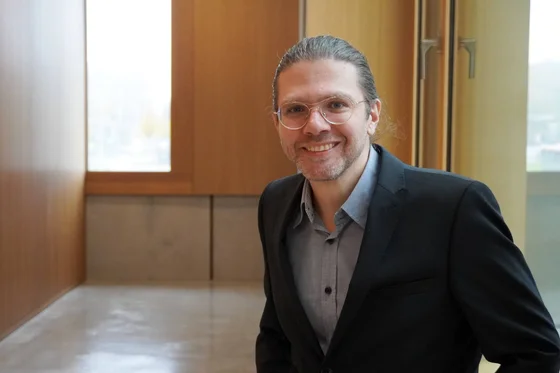
Prof. Dr. Hariolf Betz has been a professor of software development at Ulm University of Applied Sciences since 2017. He chairs the examination board of the Faculty of Mechatronics and Medical Technology and serves on the board of the proTHU association. His areas of expertise include the fundamentals of software development, scientific programming, and knowledge-based systems. In his teaching, he focuses on applied and object-oriented software development, among other topics. With his expertise, he contributes to the training of future professionals and the promotion of innovative technologies in mechatronics and medical technology.
Question: What motivated or inspired you to pursue a career in teaching?
Hariolf Betz: For as long as I can remember, I’ve had a wide range of interests. As a child, I knew almost every “What Is What” book from the library by heart. When I was four, I got glasses and from then on was nicknamed “little professor.” That naturally created an identification with the profession. I first had the idea of becoming a professor at a university of applied sciences during my studies. I myself studied at a university, earned my doctorate there, and then moved into the business world. There I realized that academia still interested me more than business.
In retrospect, my career path almost looks as if I had always been working specifically toward my current position. That certainly wasn’t my conscious intention at every stage. But at some point, everything just fell into place; I applied and was appointed.
Question: How do you structure your courses to convey the content in an understandable way?
Hariolf Betz: That’s an interesting question for which there’s probably no single, definitive answer. One method that works well for me is the Inverted Classroom. This means that students learn the course material in advance—usually with the help of videos. During the in-person lecture, I then address questions and misunderstandings and lead practical exercises to reinforce the material. The major advantage of this method is that I can respond spontaneously to students’ questions and issues in the lecture hall and am not strictly bound by the structure of my slide deck. I also always try to foster a playful approach to the subject matter. As early as the first few weeks of the program, my students create randomly generated works of art. In later semesters, they usually program a game.
What I appreciate about such exercises is that students receive direct visual feedback. It’s easier to notice “my game character isn’t moving the way it should” than to see in a database application: “there’s a 5 at the end where a 10 should have been.” On top of that, creative freedom can be incredibly motivating. Sometimes motivational resources come to light that you wouldn’t have thought possible. And that’s despite the fact that game programming is one of the most complex domains of software development.
Question: What aspects of your job do you like the most?
Hariolf Betz: Actually, the freedom is a huge plus. I only realized the extent of this freedom as I went along. I don’t just determine the specific content I use to fill in the requirements of the module manuals, but also the method by which I convey this content—and I do this in new ways time and again. That’s fantastic. Of course, I also appreciate the high level of security, the job stability, and the fact that I have to worry much less about my retirement savings than others do. You feel very protected in this profession, in a good way. That’s nice.
Question: What challenges does the job of a professor entail from your perspective?
Hariolf Betz: I was diagnosed with ADHD at the beginning of this year. That explains quite well why certain things are harder for me than for others: administrative tasks, for example, can quickly ruin my day, even if they don’t actually take much time. So I often put them off until the very last minute. The same goes for any recurring task that doesn’t present a significant challenge. I’m also not a particularly patient person. I usually speak and think faster than the person I’m talking to. In face-to-face conversations, I get bored quickly, and it takes effort not to lose my focus. I won’t even get started on my lack of talent for participating in committee meetings.
Question: Would you say that the ADHD diagnosis is a major challenge for you as a professor?
Hariolf Betz: No , I wouldn’t generalize it that way. My disposition also makes many things easier for me. For example, I’m good at improvising, and I love being on stage. That’s why I’ve been doing improvisational theater for many years, which I find to be an enormous advantage in the lecture hall. When I’m in hyperfocus, it’s very easy for me to acquire knowledge and new skills in a short amount of time. People also say that those of us with ADHD have a broad general knowledge, a sense of humor, and good insight into human nature. By the way, I’m pretty sure I’m not the only professor with ADHD at THU.
I don’t see the diagnosis as an illness, but rather as a variant of normality with its pros and cons. However, it can be very stressful if you measure yourself against standards that actually apply to neurotypical people—that is, people without ADHD. Then you tend to overestimate your own deficits and overlook your strengths. That’s why the diagnosis has helped me a lot. For the future, I hope that we as a society learn to talk openly about neurodiversity. I’d be happy to do my part toward that.
Question: How do you like Ulm?
Hariolf Betz: Ulm is a great city. For me, Ulm is just the right size. On the one hand, I can get out into nature incredibly quickly. I used to often hop on my bike in the afternoons and ride out to the Swabian Alb. Now that I have kids, I can be in the woods with the stroller in five minutes.
On the other hand, there’s also a lot on offer culturally. Of course, on a smaller scale than in a big city. But to be honest, big cities tend to overwhelm me rather than let me enjoy them.
Question: Do you have a favorite spot in Ulm?
Hariolf Betz: My favorite spot is the section of the Ulm Höhenweg from Uni West to my home on the old Eselsberg. Another favorite spot is the Hochsträß. Before we had children, my wife and I often rode our mountain bikes up there. Now we go there with the kids in the fall to fly kites. I realize that I’ve always appreciated the outskirts of the city. The view of the city in front of me, the rustling trees behind me: that’s what makes a place feel right to me. Ulm has plenty of such places.
Question: You have been chair of the examination committee for several years. How do you ensure in this role that exams and the examination process are conducted transparently and fairly?
Hariolf Betz: The evaluation of exam performance as such naturally falls within the competence of my colleagues. As chair of the examination committee, my primary role is to lead the meetings in which we decide on student appeals. To this end, I acquire legal knowledge to understand the scope of our discretion and the potential consequences of our decisions, and to communicate this to the committee. I also ensure that we remain consistent in our decision-making practices.
Another important topic is exam planning, on which I focus intensively for several weeks each year.
Question: Parental leave often brings many changes. How did you experience that?
Hariolf Betz: When my first daughter was six months old, I took a full semester off while my wife worked. That was really a leap into the deep end. At first, my daughter cried a lot and wanted her mom. I admit that I definitely struggled with my decision during the first few days. After a few weeks, however, my daughter and I were well attuned to each other and had a wonderful time together from then on.
When my second daughter was born, there was no question in my mind that I wanted to take another semester of parental leave. I’m really looking forward to this time. At first, it will be a challenge again because I’ll have to step out of my usual routines and my comfort zone. This time, though, I already know for sure that it will be a wonderful time.
Question: What advice would you give to someone considering becoming a professor at a university of applied sciences?
Hariolf Betz: My first impulse is to say: Just do it! But perhaps I’m speaking too much from my own perspective. Perhaps the advice should be: Listen to your gut! For me, there was no question that I enjoy diving into new topics, that I’m good at explaining and presenting, and that I value academic freedom just as much as financial security. Anyone cut from that cloth will love this profession.
What helped me dispel any remaining doubts were personal conversations with professors from my extended circle of acquaintances. They all encouraged me in my decision, for which I am very grateful today. Hence my second piece of advice: Talk to professors.
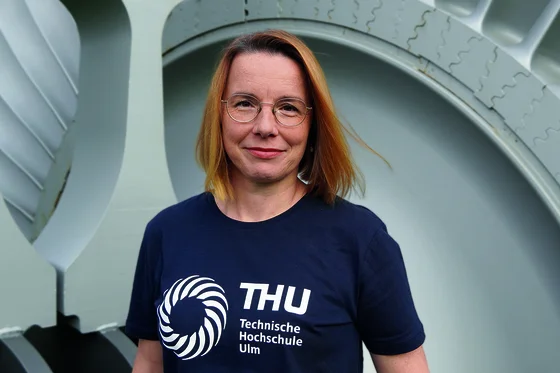
Prof. Dr.-Ing. Annika Götz, born in 1977, studied mechanical engineering at the Karlsruhe Institute of Technology (KIT) and earned her doctorate in technical design at the University of Stuttgart, becoming the first woman to do so at that department. In 2009, she received the Gustav Magenwirth Foundation Award for outstanding achievements for her dissertation, “Adaptive Design Process for Engineers and Designers.”
After completing her doctorate, she worked at Diehl Aviation in Laupheim until 2020, focusing on the design of rest areas. Since 2020, she has been a professor in the Department of Mechanical and Automotive Engineering, where she teaches design, among other subjects. The topic of her inaugural lecture: “So where exactly is ergonomics?”
Question: What motivated you to apply for a professorship at THU?
Annika Götz: Even while I was working in industry, I held a teaching position at THU for many years. Once a week, in the evenings after work, I gave a lecture at THU—something I looked forward to as early as lunchtime. I realized that I really enjoyed passing on knowledge and motivating people to learn.
Question: How did you come up with the idea of taking on a teaching position?
Annika Götz: It was a coincidence. I knew someone at THU whom I had met during my doctoral studies at the University of Stuttgart, and they gave me the idea. Chance presented me with an opportunity, and I just had to seize it.
Question: Which aspects of your work as a professor appealed to you most when you applied?
Annika Götz: At first, I was primarily motivated by the desire to pass on my knowledge. It wasn’t until I was already a professor at THU that I realized how much autonomy I have in my work here. At a university, it’s possible to tackle many things based on my own motivation and to drive forward topics I’m passionate about. In industry, by comparison, much is dictated from the outside: by supervisors, projects, schedules, orders, and clients. Of course, I also have responsibilities at a university, such as ensuring teaching and exams. My course material must align with the THU’s curriculum and cover specific areas. But how I teach the material is largely up to me.
Question: Why did you specifically want to become a professor at a University of Applied Sciences (HAW)?
Annika Götz: A major advantage of a university of applied sciences is that there is a lot of contact with industry. During my time in the corporate world, I experienced a lot—for example, all the things that can go wrong and how I can fix them. When I share these behind-the-scenes stories, those are the moments when students really love to listen. Then some nod knowingly because they’ve already experienced that in a company, perhaps during their internship semester. We also have students in the Ulm Model, who are completing a degree program with integrated vocational training. I think this is a tremendous asset.
Question: How exactly do you stay up to date to prepare your students for their professional future?
Annika Götz: I visit the students during their internship semesters at their companies. When I walk through the workplaces, I enjoy striking up conversations with employees and listening to what’s going well and where there are current challenges. I also base some of my lectures on this. In addition, my former company provides the topic for my lecture on design methodology every semester. It always revolves around a topic that is a pressing concern for the company. The students’ proposed solutions don’t end up in a drawer; instead, the company continues to work with them. I’m always surprised by how creative students are and the ideas they come up with. The advantage of new graduates is that they still have a broad perspective and don’t think: “I’d rather not do that; it’s never worked before.”
Question: How do you approach teaching, and what is important to you in this regard?
Annika Götz: Under no circumstances do I want to just drone on about my material in a lecture-style setting. I experienced that enough as a student. What’s important to me is my personal attitude: If I enjoy conveying my content myself because I’m passionate about it, then there’s a good chance I can get the students on board. I like to communicate directly with students and ask a lot of questions. I want students to discover the topics on their own through assignments, search for answers, and be able to draw on knowledge from reliable sources. I want to empower them to help themselves. Of course, I also lecture in the lecture hall from time to time. But I notice that the exercises are what lead to those “aha” moments. The best part is when I can see in most students’ eyes that it’s “clicked.”
Question: Is there a favorite project you’d like to pursue at THU?
Annika Götz: My passion is the reparability of products—it’s all about sustainability and conserving resources. It’s still in its infancy. I’m supervising two bachelor’s theses on this topic. Afterthat, I’ll see how it develops and whether I can build something here.
Question: There are many ways to get involved at a university. Is there a specific area that appeals to you?
Annika Götz: Right now , I find it very exciting to promote the profession of mechanical engineer. We visit schools and provide information about the excellent education at THU. We want to convey that this is a truly great job—diverse, interesting, well-paid, and in high demand. I also enjoy providing information about our degree programs at our booth during the education fair. Then there’s the “Girls Academy”—where girls from two high schools come to visit us. Here, they get to use CAD software to design keychains and end up holding their own printed keychain in their hands.
Question: How did you settle into your department of Mechanical and Automotive Engineering?
Annika Götz: The camaraderie is great. We can meet in the conference room in the morning and after lunch, have a coffee, and chat about work, personal life, or hobbies.
Question: You were already quite familiar with the Ulm region because you had worked here. How would you describe the region and its people to someone who doesn’t know them yet?
Annika Götz: I find the people of Ulm and the Ulm region very friendly. People here love to celebrate and have a bit of fun—the “Nabada” is a perfect example. When I need some peace and quiet, I like to sit by the Danube. I watch the birds and the people as they go for walks, rollerblade, or ride bikes.
Question: And your insider tip?
Annika Götz: The astronomical clock in City Hall. When you consider that it’s nearly 500 years old and displays 15 pieces of calendar information, it’s an ingenious feat. Just imagine the mechanism behind it. A magnificent piece of engineering!
Prof. Dr. Martin Heßling has been a professor of Instrumentation for Biotechnology and Medicine at the THU since 2005. His teaching focuses on subjects such as biophotonics, biotechnology, and bioprocess engineering. In addition to his teaching duties, Prof. Heßling is also active in applied research and leads a research group specializing in germ control using visible light and UV radiation. Of particular note is his project aimed at reducing the risk of ventilator-associated pneumonia in intensive care patients. In this context, his research group is investigating the use of blue and violet light in medical devices, particularly in endotracheal tubes, to prevent bacterial infections in the lungs.
Question: What do you find most rewarding about being a professor?
Martin Heßling: I think thebest partis that you’re your own boss. Within the established guidelines, I do what I think makes sense, when I think it makes sense, and how I think it makes sense. I find that a significant improvement over working in industry. Another point is that the job offers a lot of variety. Within the framework we have, we have a great deal of freedom and can pursue quite diverse projects. Right now, we’re working on projects in medical technology, biotechnology, and food technology, and tackling a wide variety of topics—such as drinking water disinfection. Sometimes you also have to do things that you might not have learned yourself. But in many ways, that’s actually quite good. And the third thing I really like—which I wouldn’t have thought as a high school or college student—is job security.
Question: What ultimately motivated you to pursue a career as a professor?
Martin Heßling: To be honest , I can’t even remember exactly when I decided to become a professor. I know that right after high school I once said that I wanted to at least get a doctorate, maybe even become a professor. But I didn’t have that as a fixed goal; it developed more gradually. I was in the university system for a long time and then at some point started working toward that direction. During my postdoc, I took various distance learning courses, including in medical technology and adult education—partly with the idea that it might come in handy someday. I gained teaching experience early on, first at the university and later at the Technical Academy, alongside my job in industry. It was pretty exhausting, but it showed me that teaching suits me. In the end, of course, it always depends on whether the right position is available.
Question: Can you tell us more about your research projects?
Martin Heßling: Our research lies at the intersection of optics, biotechnology, and medical technology. A major focus is on radiation disinfection, particularly using light. For example, we’ve worked on disinfecting drinking water and food, but also on touchscreens in public areas, which are often heavily contaminated with germs. Especially in hospitals, where patients no longer have paper files but use tablets instead, this can pose a risk of infection. As part of a thesis project, we succeeded in enabling a touchscreen to self-disinfect within one second—reducing staphylococci by 99.9%, at least. Another project focused on contact lens disinfection. Conventional contact lens solutions are either effective at disinfecting or are particularly gentle on the eyes. At the time, there was no product that combined both features. Our idea was to disinfect the contact lenses using light by irradiating them for 8 hours, which reduces bacteria by four orders of magnitude and eliminates the need for chemical disinfectants. Our master’s student won several awards for this work. Another project concerns ventilated patients who are at high risk for pneumonia. The problem is that germs accumulate in the throat. We are working on developing endotracheal tubes with built-in LEDs that are designed to irradiate germs directly during ventilation and thereby reduce them.
Question: To what extent do your research projects have an impact on society?
Martin Heßling: In the early days of the pandemic, a lot of the focus was naturally on how to get rid of the coronavirus. We analyzed data and provided recommendations to various organizations, including scientific journals. There was once talk that it helps to inhale hot air, for example by breathing in through a hair dryer. That didn’t work, for instance. So that was the impact on society—we answered questions that were very diverse in nature.
Question: What do you value most about your work with students?
Martin Heßling: What I really appreciate is that students are always coming up with new ideas and questioning things. Sometimes, when it comes to research or projects, I have an idea of how things should be done and how they shouldn’t be done. But sometimes the students try to do it exactly the way I think they shouldn’t, and then I realize: It works. The illumination of endotracheal tubes is now based on fiber optics, and at first I thought the light wouldn’t be bright enough. Then I had students set up the first project of this kind, and it worked. Another point is that students can often get excited about topics that might already be old hat to me.
Question: Are there any specific teaching methods you use?
Martin Heßling: I try to actively involve the students. Personal connections help with this, for example when it comes to visual impairments or age-related ailments that might affect them or their relatives. Otherwise, I work with conventional methods like PowerPoint, but I also like to show English-language videos and animations, especially in biotechnology, where many processes are hard to visualize. I also use models of bacteria such as E. coli or staphylococci. My courses often take place in four-hour blocks. This allows me to directly link theory and lab work. For example, we first explain the PCR method and then apply it in the lab. In the Fundamentals of Biotechnology course, the practical component accounts for about 50%; in other subjects, it’s slightly less, but still substantial. This facilitates understanding because the theory isn’t applied later on, when it might already have been forgotten.
Question: How do you involve students in your research projects?
Martin Heßling: We offer students in their fourth semester a bachelor’s project where they can try out various things. In the last semester, for example, students were tasked with building an algae bioreactor as part of their bachelor’s project. In another project, students were tasked with developing a setup for salad disinfection—a kind of washing machine with a grid and a UV lamp, in which the lettuce leaves were then swirled around.
Question: Has the profession of professor changed since the beginning of your career?
Martin Heßling: Changes usually happen gradually. Back then, teaching was much more important. I see this as a positive development, because you can really fulfill yourself in research. Of course, the bureaucratic framework has increased; for example, there used to be fewer data protection regulations.
Question: How does research at a university of applied sciences differ from that at a traditional university?
Martin Heßling: At auniversity of applied sciences, you often see a direct practical application in research—for example, when it comes to preventing diseases. At a university, on the other hand, the focus is usually on basic research, which can have a major impact, but often only after a long delay. During my physics studies, I investigated argon deuteride, a compound consisting of a noble gas and heavy hydrogen. I found that exciting because I was working with lasers and something new was being discovered. But practically speaking, this compound doesn’t exist on Earth.
Question: In your opinion, what are the most important qualities and skills someone needs to have if they want to pursue this path?
Martin Heßling: Aside from the fact that you obviously have to be good at your subject, two things are important. You have to be sure that you want to teach for decades. Even after 20 years, I still have to prepare extensively for some lectures. Especially in the beginning, you still have to build up the content. That’s why it’s essential to try it out beforehand to see if you really want to do it—for example, by taking on a teaching assignment. Second, you need intrinsic motivation—that is, you should be motivated to make good use of the freedom you have. Because there’s no one from the outside telling you what to do.
Question: What advice would you give to researchers who want to pursue this path?
Martin Heßling: Tryteaching . A trial lecture certainly takes a lot of time to prepare, but you won’t be able to tell just from that. The beginning can be exhausting, but it naturally gets better. Later on, you’ll have materials you can fall back on. Even for me, there are subjects I’ve studied myself, and there are subjects I’m supposed to teach but haven’t studied, such as bioprocess engineering. In those cases, I have to prepare every lecture and, just like 20 years ago when I first taught it, make sure I understand the material myself.
Question: Do you have a favorite place in the region?
Martin Heßling: I don’t have just one favorite place in the region. But when I’m not at home or at the university, I’m often in Bad Blau.
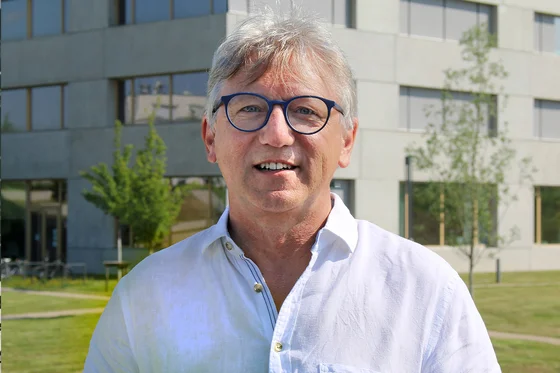
Prof. Gerd Heilscher is a professor of “Energy Data Management for Decentralized Renewable Energy Systems” and was appointed to the endowed professorship at the University of Ulm (THU) in 2006. He heads the Smart Grids Research Group, which focuses on energy infrastructure, energy informatics, energy meteorology, and energy economics. From 1991 to 2006, he served as Managing Director of meteocontrol GmbH. During his research semester in the U.S. in 2011/12, he conducted analyses of rapid changes in solar irradiance and their effects on the power grid. Prof. Heilscher teaches courses in Electrical Grids, Energy Data Management, and Photovoltaics, among others. In 2014, Prof. Heilscher received the City of Ulm Science Award.
Question: What do you find most rewarding about being a professor?
Gerd Heilscher: The combination of research and teaching, as well as working with the research team. Another great thing about the job is equipping students and staff with the tools they need to develop solutions for the challenges of transforming the energy system. When interacting with students, I rarely realize that I’m already over 60. I can still learn new things myself—especially during research semesters.
By far the best part of my job, however, is seeing where former students and R&D staff are now contributing to shaping the energy transition in various leadership roles.
Question: You come from the private sector and do not hold a Ph.D. What motivated you to pursue an academic career as a professor?
Gerd Heilscher: In the corporate world, I always conducted research and published results alongside my management duties. When I applied for the professorship at THU, I had already been giving lectures on renewable energy as a lecturer in Munich for more than 10 years. So I was very familiar with teaching: conveying three hours of knowledge to young students in a lecture.
There came a point when I didn’t know if I would still be the CEO of the company I founded the next day. That didn’t happen, but it raised the question: “What would I actually do if I were no longer running this company?” I gave this some serious thought and came to the conclusion: I want to actively help shape the energy transition. A professorship was the right place for that.
Then the ad for the endowed professorship at THU appeared in Die Zeit, and I thought: They’re looking for me!
Question: You are one of the most research-intensive professors at THU. Do you have a favorite project among all your current research projects?
Gerd Heilscher: I find the InterBDL project very exciting. A long-time colleague suggested back then that we also focus on e-mobility, which led to the launch of two projects in this area. Two summers ago, he formed a team with research partners, which was merged with another team from different organizations. This led to the InterBDL project on bidirectional charging of electric vehicles, which began last summer. What I find exciting about this project, aside from the important scientific questions, is witnessing the personal growth of the staff within the freedom of research. They grow with their tasks and dedicate their energy to the energy transition.
For me personally, international cooperation is also of great importance, particularly with the International Energy Agency. I was active in the Photovoltaics Technology Program for eight years and led an expert group on the grid integration of photovoltaic systems for four years. If funding is secured, we will launch another four-year international collaboration on photovoltaic grid integration within the IEA’s Photovoltaics Technology Program in early 2025. I am committed to organizing this collaboration, connecting experts, and learning from one another. This international, global exchange across all borders is personally very important to me.
Question: Which moments in your research have made you particularly proud?
Gerd Heilscher: The rollout of the smart meter infrastructure was a very difficult process. On top of that, the COVID-19 pandemic and the move into our new building happened at the same time. The fact that our team managed to pull this off in the spring of 2020—after just nine months—as one of the first to do so—I’m truly proud of the employees who made this happen! The topic is still relevant today. The smart meter rollout is set to become a control rollout. This will allow solar power systems, heat pumps, and charging points to be “dimmed” when the power grid reaches its limits.
Question: How do you involve students in your research projects?
Gerd Heilscher: It starts as early as the first semester—we invite students from the very beginning to work with us as student assistants. During the program itself, topics from the research projects are covered in lectures. Active participation in research projects is then possible through project work and theses.
A successful model is the 50% part-time job as a full-fledged employee during the master’s program.
Question: Which academic networks are important for your research and teaching?
Gerd Heilscher: It was important to network the research of universities of applied sciences with the BW-CAR in order to obtain the right to award doctorates after many years as a university. The University Working Group of the German Solar Energy Society is very helpful; we meet once a year to exchange ideas on teaching concepts. At the international level, there is also ISES, the International Solar Energy Society. Here, the exchange takes place through its own journal (Solar Energy) and, of course, through scientific conferences.
A special network is the Technology Programs (TCP) of the International Energy Agency (IEA). In the field of photovoltaics, there is the Photovoltaic Power System Program (PVPS). For over eight years, I have been working there with a global group of experts on the grid integration of solar power, and for the past five years I have had the privilege of leading this group together with the AIT in Vienna.
Question: What helped you build a network?
Gerd Heilscher: I laidthe foundation for my professional network as early as my youth. I had the opportunity to attend a youth leadership course with the Evangelical Youth, where I learned how to lead people and groups. These early experiences in communication skills were formative for me. While studying in Munich, there was a working group on “Renewable Energies,” through which I discovered the master’s program in “Renewable Energy Systems” at the University of Oldenburg. This was also the starting point for my network in the field of renewable energies. While studying in Oldenburg, I met the managing directors of one of Germany’s largest inverter manufacturers, SMA. At the time, the company was still small, and the managing directors conducted workshops themselves. That’s how I came to meet one of them in Tunis during my master’s thesis, while a wind turbine was being installed. That’s how my professional network began.
I’m very outgoing and enjoy attending trade shows. Recently, I spent two days at the InterSolar trade show again. Such opportunities are important because networks develop over a long period of time and are based on personal relationships with people—that doesn’t work “online.”
At the university, we also collaborate with industry partners on our projects. Nowadays, they even approach us to carry out joint projects and use our labs. A good example is our Smart Grid Lab at THU, which we use as a JointLab together with our industry partners.
Question: What advice would you give to scientists and aspiring professors who are aiming for a similar career path?
Gerd Heilscher: The transition from industry to teaching first requires the development of course content. However, anyone who wants to be active in research as well as teaching should start in research right from the beginning—especially to leverage contacts from industry and initiate joint projects.
Collaboration with and support from established colleagues naturally helps in this regard. One “secret” of the THU and many other universities of applied sciences is the open exchange with colleagues. Here at the THU, I experience an open, trusting atmosphere among us.
Question: What is important to become a professor?
Gerd Heilscher: You should know and assess whether you want to and are able to teach. At universities of applied sciences, teaching is the foundation, and 18 contact hours per week should not be underestimated. It’s ideal if someone has already held a teaching position and understands what teaching entails. When we’re looking for new professors, they should be motivated to teach and able to convey the material to young people.
It helped me that I had already worked for ten years as a lecturer at the Munich University of Applied Sciences. I already knew what it meant to stand in front of students for three hours, talk about renewable energy, and help them build skills. Someone also needs to have been in the profession for a while and bring their professional experience to the table. Enjoying working with people—and especially young people—helps!
Question: How do you see the future development of the role of a professor, particularly in the field of research? What changes and trends do you consider particularly significant?
Gerd Heilscher: Thanks to the right to award doctorates at the universities of applied sciences (HAWs), we can successfully continue our extensive research in the Smart Grids Research Group at THU, marking a significant milestone. Acquiring R&D projects and writing publications are challenging at the beginning as a professor without staff. However, the development of research management and the collegial environment at THU help make the transition. The prerequisite and foundation, however, is one’s own motivation and curiosity to drive innovation.
Question: What is your favorite place in Ulm and the region?
Gerd Heilscher: Café Animo. It’s a great spot for lunch and also a place to celebrate the start or successful completion of a research project. Otherwise, there’s Café “Bella Vista” with its rooftop terrace and view of Ulm Minster. There, you can clear your head undisturbed and plan your next steps.