Institute of Applied Natural Sciences

The Institute of Applied Natural Sciences (IAN) is part of the Faculty of Mathematics, Natural and Economic Sciences.
At the IAN, students acquire fundamental knowledge of engineering physics and chemistry, as well as methodological skills in scientific research. The practical aspect is reinforced through laboratory tests and demonstration experiments. Each subject area has its own laboratory, where students carry out experiments independently.
Faculty of Mathematics, Natural and Economic Sciences (G)


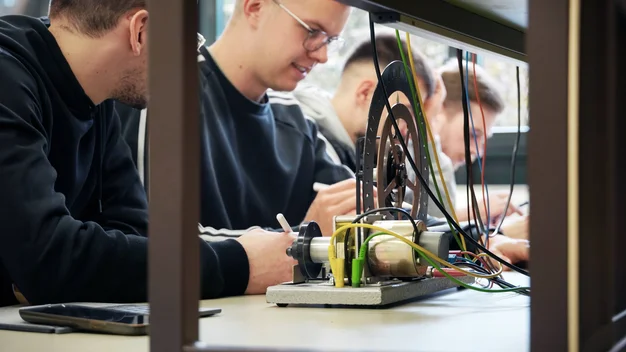
Students sit behind a wheel during an experiment in the physics lab
Copyright: THU
Students experimenting in the physics lab

Our subject areas

  • Measurement and simulation of electric and magnetic fields
  • Electromagnetic compatibility (shielding attenuation measurements)
  • Spectral analysis
  • Temperature radiation measurements and interpretation
  • Acoustics and environmental measurement technology
  • Electron microscopy

  • 3D microscopy
  • High-speed camera (40000 images/s)
  • Digital image processing
  • Signal analysis
  • Vehicle safety and simulation of occupant protection with FE models
  • Simulation of dynamic systems
  • Chemical analysis

Insights into the institute

Teaching & Equipment

Physics department

  • Teaching laboratory for students to carry out physics experiments in the fields of: Mechanics, magnetostatics, optics, atomic physics, optoelectronics, semiconductor components.
  • Demonstration experiments for physics lectures in engineering courses in the fields of: Mechanics, electrostatics, magnetostatics, matter in fields, electrodynamics, optics, waves, atomic physics, thermodynamics, semiconductor devices.
  • Magnetic field probes for direct and alternating fields (frequencies f = 16 Hz to 500 kHz)
  • E-field probes for direct and alternating fields (frequencies f = 9 kHz - 6 GHz)
  • EMC standard chambers
  • NIR/VIS spectrometers
  • IR cameras, pyrometers
  • Electron microscope
  • Systems for quality assurance, object recognition and object tracking incl. evaluation software
  • Real-time computerfor signal analysis, e.g. of radar data
  • Software for crash and occupant simulation (LS-Dyna) incl. dummies and active human models (THUMS 5 50%, 5%)
  • Simulations under MatLab / Simulink

Chemistry department

  • Teaching laboratory for chemical analysis for engineering students
  • Electrochemical apparatus
  • photometer
  • Luminescent bacteria test method
  • Gas and thin-layer chromatography
  • IR spectrometer
  • UV/VIS spectrometer
  • BOD5 measurement
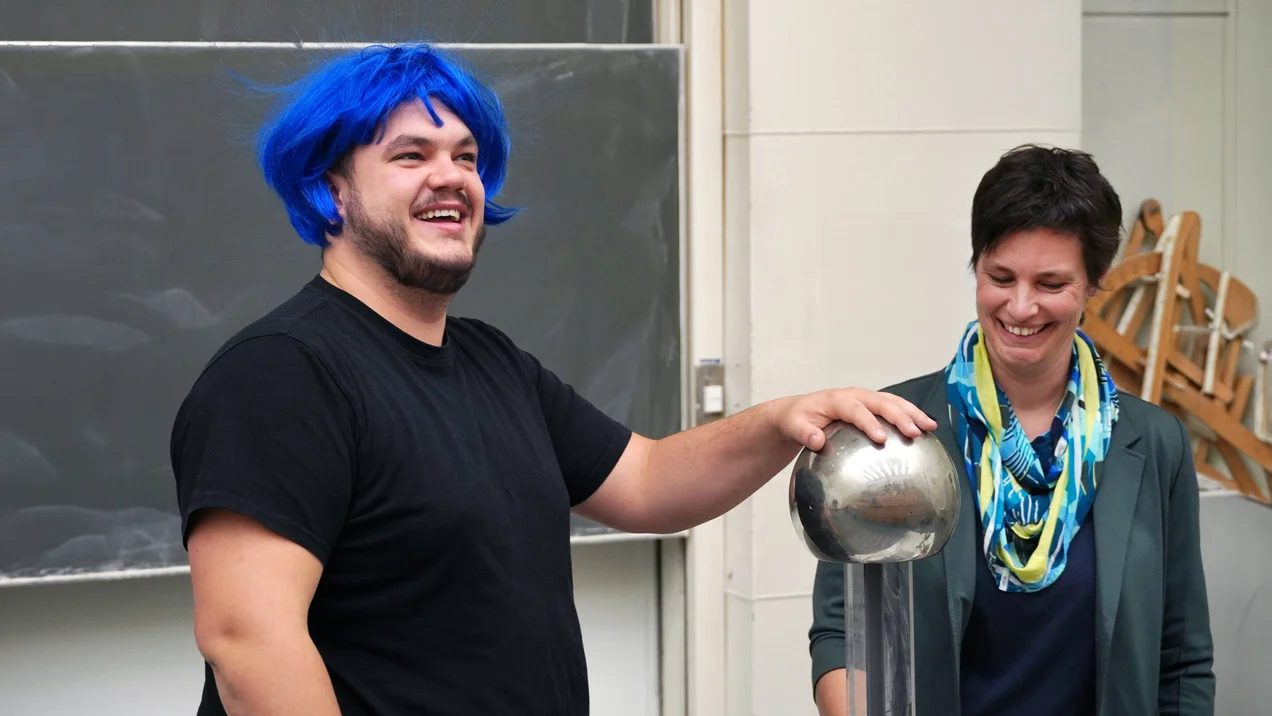
Student and professor at a boading ball by Hubbs. The student is wearing a blue wig with his hair sticking up vertically.
Copyright: THU
Demonstration test boading ball from Hubbs
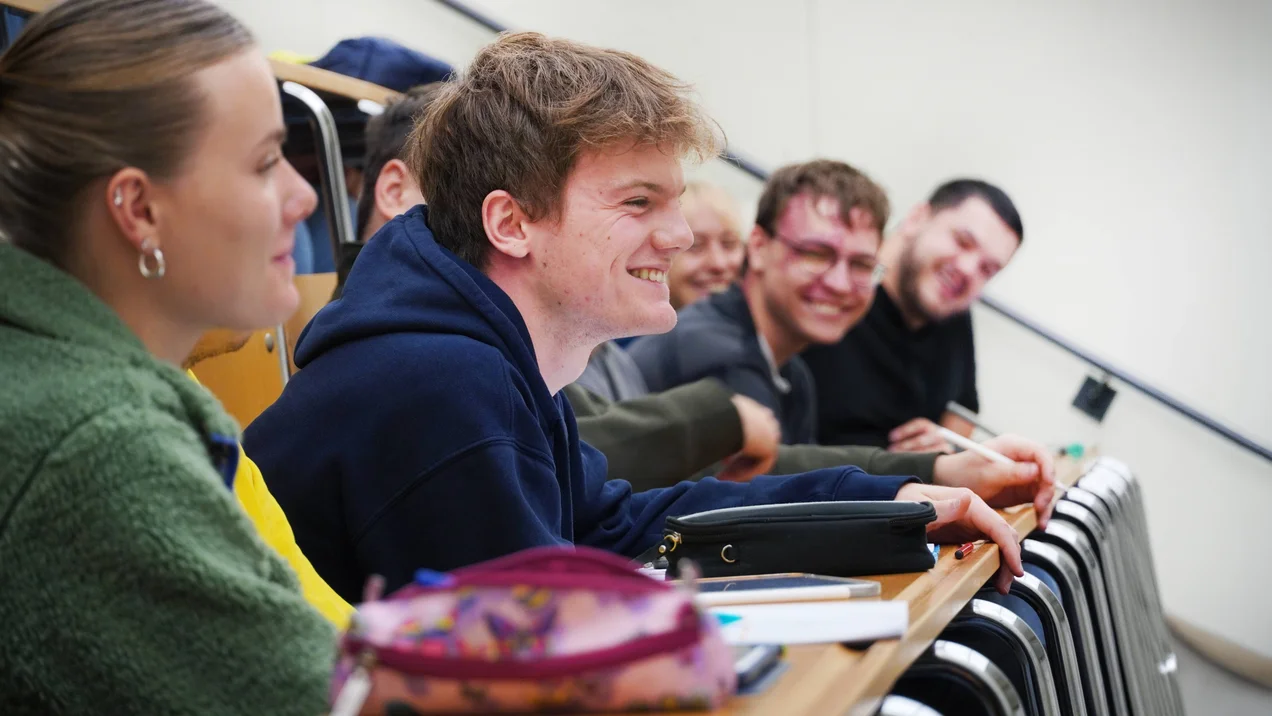
Students sit laughing in a row of chairs in the lecture hall during the physics lecture
Copyright: THU
Students in the physics lecture

Contact

Institute of Applied Natural Sciences
Professor
Faculty Mathematics, Natural and Economic Sciences
Professor
Faculty Mathematics, Natural and Economic Sciences
Placeholder
Professor
Faculty Mathematics, Natural and Economic Sciences
Placeholder
Professor
Faculty Mathematics, Natural and Economic Sciences
Placeholder
Professor
Faculty Mathematics, Natural and Economic Sciences
Professor
Faculty Mathematics, Natural and Economic Sciences
Member
Department council Mechatronics and Medical Engineering
Placeholder
Professor
Faculty Mathematics, Natural and Economic Sciences
Professor
Faculty Mathematics, Natural and Economic Sciences
Placeholder

News from the field of research

A full lecture hall
Bernd Arendt with his supervisor, Prof. Dr.-Ing. Thomas Walter