
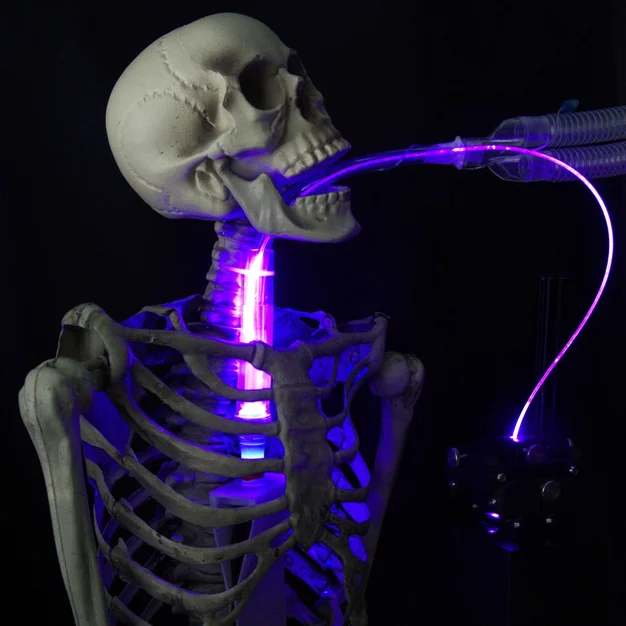
A prosthetic leg that makes it possible to play sport again. A sensor that measures, whilst you sleep, exactly how much medication is actually needed. A ventilator tube that uses blue light to prevent pneumonia. Solutions like these are being developed at Ulm University of Applied Sciences (THU). If you’d like to find out how innovative products can help people, then the Bachelor’s degree in Medical Technology is just the thing for you!
The Medical Technology degree programme combines engineering, natural sciences and medicine. Its technical core is mechatronics (mechanics and design, electrical engineering and computer science), complemented by biology, chemistry and in-depth knowledge of the human body. It is this interplay that transforms a technical idea into a device that works safely for patients.
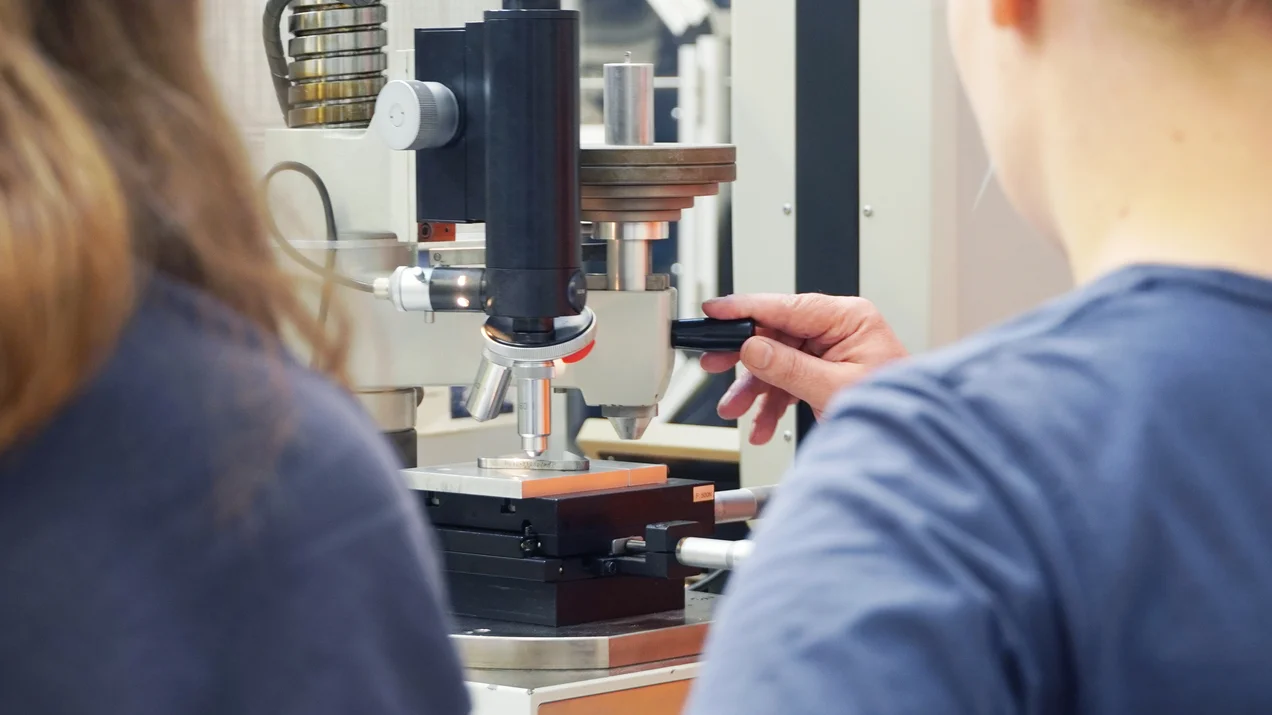
Even whilst you’re studying, you’ll be working on real-world tasks in laboratories, on development projects and during your practical placement, gaining valuable hands-on experience. You decide for yourself which area to specialise in: biomechanics and technical orthopaedics, medical electronics, software and AI, or biotechnology.
Afterwards, a meaningful career awaits you in a forward-looking industry, whether in research and development, regulatory affairs, quality management or clinical application.
In the Bachelor’s program in Medical Technology at THU, you’ll learn to work independently on technical solutions for diagnostics and therapy.
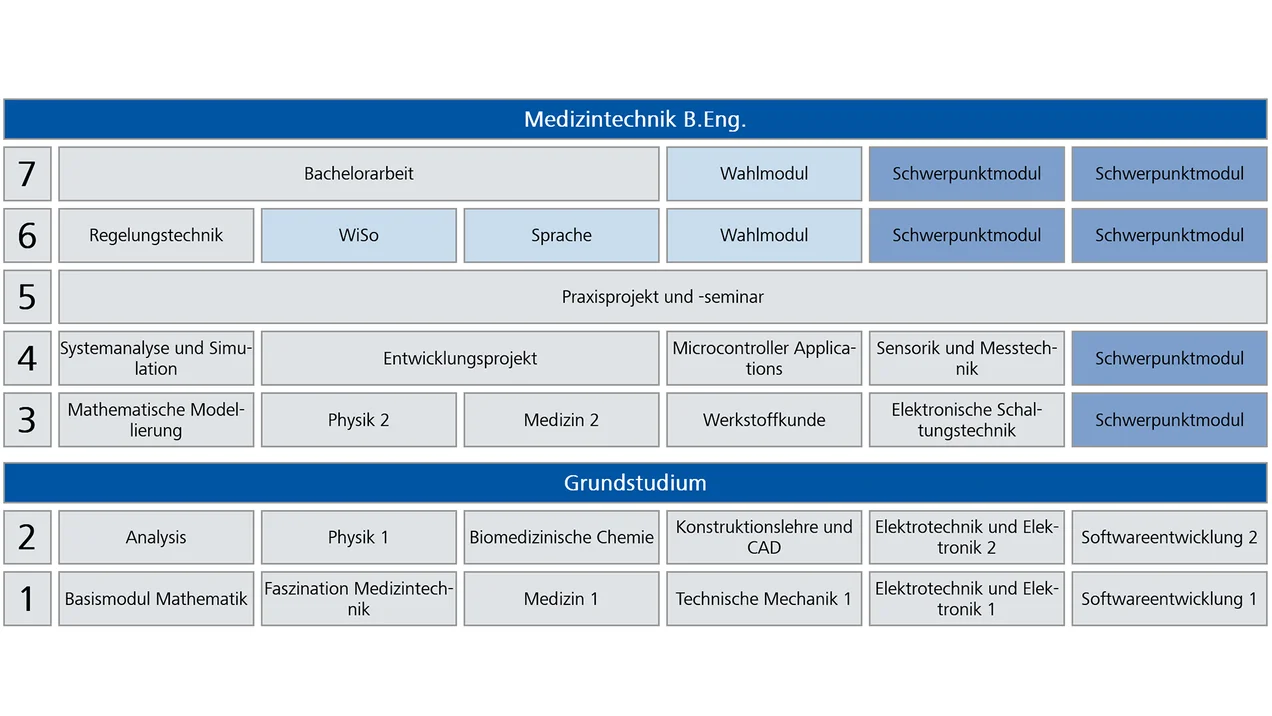
The medical technology degree program lasts seven semesters. You’ll receive an interdisciplinary education based on technical and scientific coursework, supplemented by in-depth medical knowledge of physiological processes in the human body. Above all, the program teaches the skills and competencies needed to work independently on technical solutions. Hands-on project work ensures that you not only apply these techniques but can also further develop them with a focus on patient benefit, safety, and environmental sustainability.
The foundational phase, which covers the first two semesters, is closely related to the Mechatronics program and, in keeping with the interdisciplinary nature of medical technology, is broadly structured. The advanced phase consists of additional required and elective modules (including those in the economic, social, and language fields); in addition to a comprehensive development project, the practical study semester, and the bachelor’s thesis. You will also choose one of the four specialization tracks offered, from which you will take six of the corresponding core modules.
To be admitted to the Medical Engineering course, you need a general or subject-restricted higher education entrance qualification, an entrance qualification for universities of applied sciences or a comparable qualification. The medical technology course is NC-free, so a certain grade point average or an aptitude test do not stand in your way. An enthusiasm for technology and a strong interest in medical applications are also required. If you want to make a real contribution to medical progress by developing and improving medical technology devices in order to create new possibilities for the detection and treatment of diseases, then this degree course is the right choice for you.
After successfully completing the medical technology bachelor's degree, you will be awarded the academic degree Bachelor of Engineering (B. Eng.). You can expect to work in a wide range of fields in industrial companies, hospitals and research institutions. Your fields of activity will range from research and development, production and sales to the testing and maintenance of medical technology devices.
Modern medical technology makes it possible to detect diseases earlier and treat them with increasingly effective methods. By developing and launching innovative medical technology products, companies are driving medical progress and continuously improving healthcare. As a result, the medical technology sector is growing steadily and requires specialists who combine technical expertise with sound medical knowledge.
According to the German Medical Technology Association (BVMed), however, many companies are searching in vain for technologically qualified specialists. At the same time, demographic change, growing health awareness and medical-technical progress are increasing the demand for innovative solutions. These developments create future prospects and open up a wide range of long-term career opportunities in medical technology.