
At a glance
| Ulm Model | In-depth Practice | |
|---|---|---|
| Content | Study + training | Study + additional practice |
| Standard period of study | 9 semesters | 7 semesters |
| Degree | Bachelor of Engineering (B. Eng.) + vocational qualification | Bachelor of Engineering (B. Eng.) |
| Start | September 1 | winter and summer semester |
Procedure
Food Technology - Ulm Model
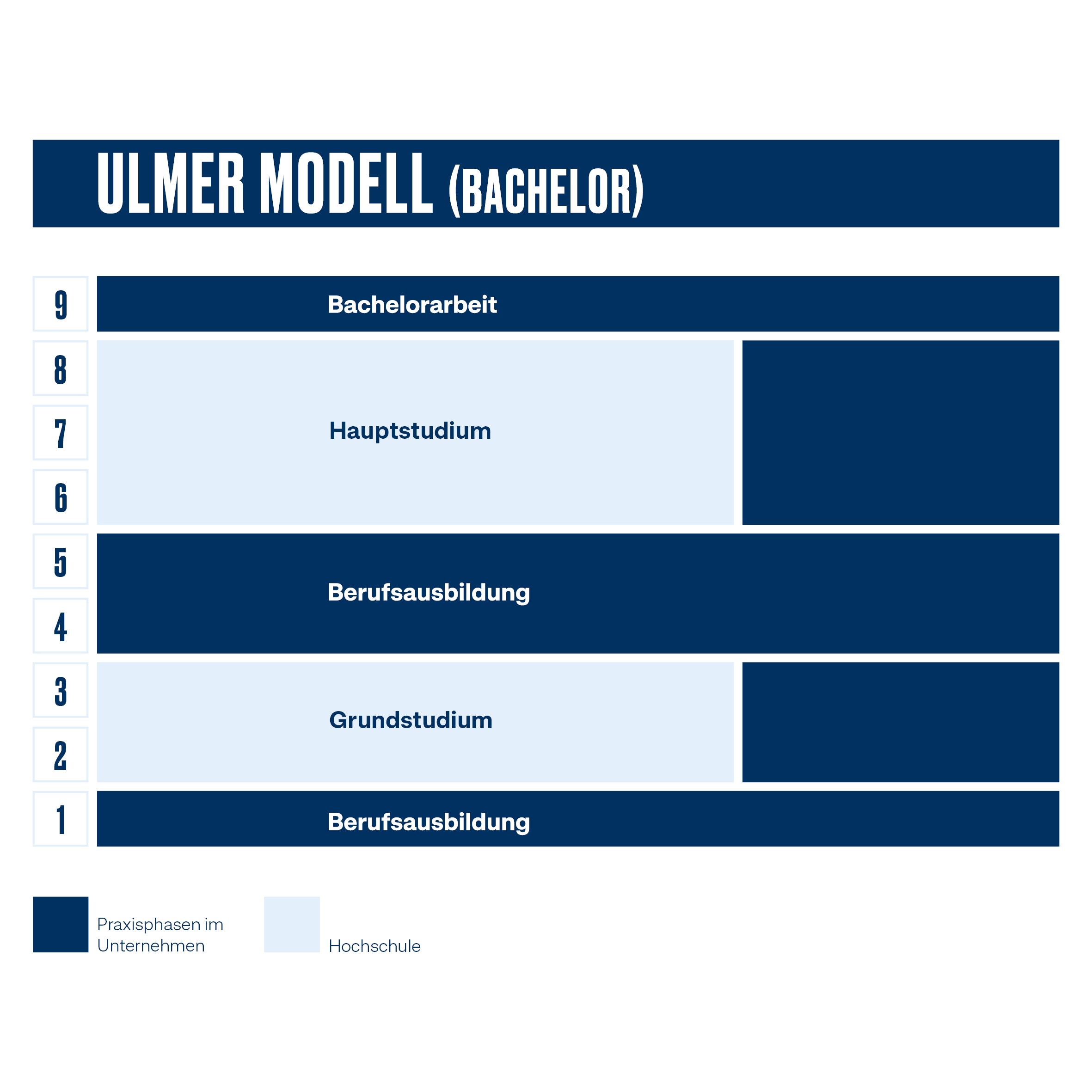
The dual degree program in Food Technology based on the Ulm Model at Ulm University of Applied Sciences begins every year on September 1 and lasts 4.5 years.
The bachelor’s program in Food Technology offers comprehensive training in the scientific and technical fundamentals of food production and processing. You’ll spend the first half-year at a company, where you’ll begin your training. This is followed by a two-semester foundational phase. You will then spend a year at the company, complete your training, and gain valuable practical experience.
As the program progresses, theoretical and practical phases alternate. You’ll collaborate on projects in specialized departments and write your bachelor’s thesis at the company during your final semester. Various required-elective courses offer you the opportunity to specialize in specific aspects of food technology, such as biotechnology, renewable energy, or industrial energy systems.
Food Technology - Advanced Practice
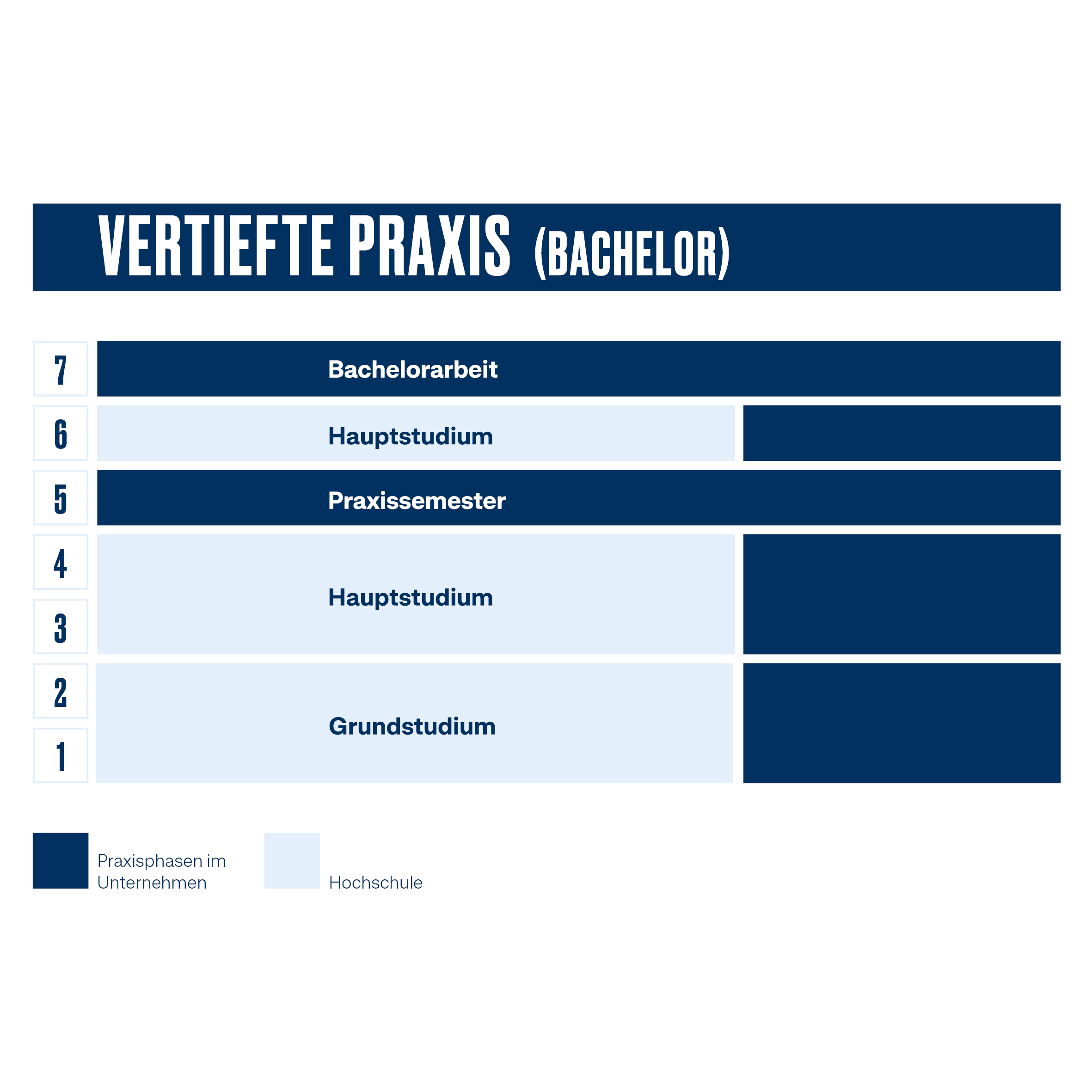
The degree program in food technology with an in-depth practical component begins in the summer and winter semesters and lasts 7 semesters. If you’ve already signed your contract before the start of the program, you’ll first get to know your company during a short orientation phase lasting two to four weeks. Afterward, your studies will begin directly at the university with the first lectures.
As the program progresses, theoretical and practical phases alternate: During lecture and exam periods, you’ll study at THU; during breaks from classes, you’ll gain valuable practical experience at the company. During the introductory phase (1st–2nd semesters), you’ll learn the fundamental natural science and technical subjects. These form the foundation for understanding complex processes in food technology. During the advanced study phase (3rd–6th semesters), you’ll deepen your knowledge in specific areas of food technology and acquire practical skills. You’ll complete your internship semester and your bachelor’s thesis directly at your partner company.