


FLEXSolar-BW integrates flexible export limits from South Australia into the German distribution network infrastructure in order to utilise existing grid capacity efficiently and safely.
Building on experience gained in South Australia, the project links communication via IEEE 2030.5 with the German smart meter infrastructure and control systems for low-voltage networks.
The growing installed capacity of rooftop photovoltaic systems poses new challenges for distribution grids. High levels of simultaneous feed-in can lead to voltage problems, reverse power flow, and increased strain on grid infrastructure. While grid expansion has traditionally been used to address these challenges, it alone will no longer be sufficient in the future to accommodate the continued growth of decentralized PV generation. Therefore, the control of decentralized energy systems represents an important complementary approach to utilizing the existing grid infrastructure and available grid connection capacities more efficiently.
Fixed feed-in limits and zero-feed-in requirements restrict the injection of electricity into the grid but do not account for how available grid capacities change over time. The approach of flexible export limits from South Australia provides practical experience with dynamically adjusting feed-in limits to prevailing grid conditions.
Applying this approach to Germany requires more than just the introduction of a communication protocol. Distribution system operators, metering point operators, gateway administrators, and active external market participants must coordinate their respective responsibilities and interfaces. Furthermore, communication via IEEE 2030.5 must interoperate with smart meter gateways, CLS components, and control systems for low-voltage grids.
FLEXSolar-BW addresses this integration challenge and examines which lessons from South Australia can be applied to the technical and organizational framework in Germany.
| Project Acronym | FLEXSolar-BW |
|---|---|
| Project Title | Flexible Export Limits for Solar Peak Load in Baden-Württemberg |
| Project Duration | 12/2025 – 12/2027 (24 months) |
| Project Leader | Ulm University of Applied Sciences, Institut for Energy Technology and Energy Economics, Smart Grids Research Group |
| Funding Program | BWPLUS — Baden-Württemberg Program for Environmental Research |
| Funding Agency | Ministry of the Environment, Climate, and Energy, Baden-Württemberg |
| Grant Number | L7526101 |
By dynamically adjusting feed-in limits to the prevailing grid conditions, existing grid capacities can be better utilized, unnecessary curtailment can be reduced, and fair grid access for existing and new PV systems can be supported.
As part of the FLEXSolar-BW project, the Smart Grids Research Group at Ulm University of Applied Sciences, in collaboration with the Australian distribution system operator SA Power Networks and stakeholders involved in the German control system rollout, is investigating five interrelated research questions.
IEEE 2030.5 is a communication standard for the exchange of information between energy systems and the systems that manage and control them. First published by the IEEE in 2013, the standard provides a foundation for standardized communication with distributed energy systems. (Source: IEEE 2030.5-2023)
A well-known example of its application is California’s Rule 21 , which uses IEEE 2030.5 together with the Common Smart Inverter Profile (CSIP) as its standard protocol. The SunSpec Alliance, a project partner of FLEXSolarBW, supports interoperability through its IEEE 2030.5/CSIP testing and certification program. (Source: SunSpec IEEE 2030.5 / CSIP)
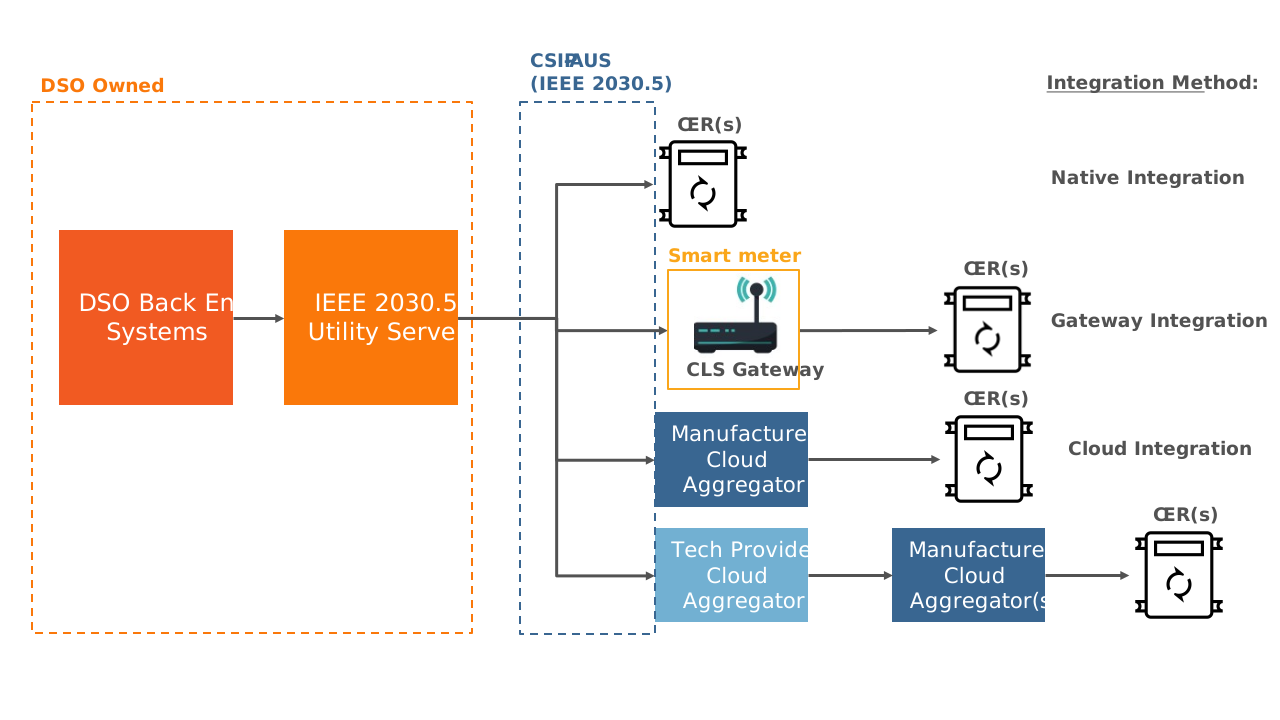
CSIP-AUS stands for Common Smart Inverter Profile – Australia. It is based on IEEE 2030.5 and adapts the CSIP—originally developed for California—to Australian requirements. It establishes a unified communication framework for distributed energy resources from various manufacturers and supports applications such as dynamic feed-in limits and emergency control. (Source: About CSIP-AUS)
The development was supported by the Flexible Exports Trial project, funded by the Australian agency ARENA and carried out by SA Power Networks (SAPN) in collaboration with AusNet and other technology partners. As part of SAPN’s Flexible Exports offering, compatible, internet-enabled inverters receive updated feed-in limits and adjust their feed-in to match available grid capacity. CSIP-AUS provides a standardized communication foundation for this purpose. (Sources: SAPN Flexible Exports Trial – Final Report and SA Power Networks – Flexible Exports)
Together with SAPN and the other project partners, FLEXSolar-BW is investigating how these communication functions and operational processes can be integrated into the German smart meter infrastructure and the control systems for low-voltage grids.
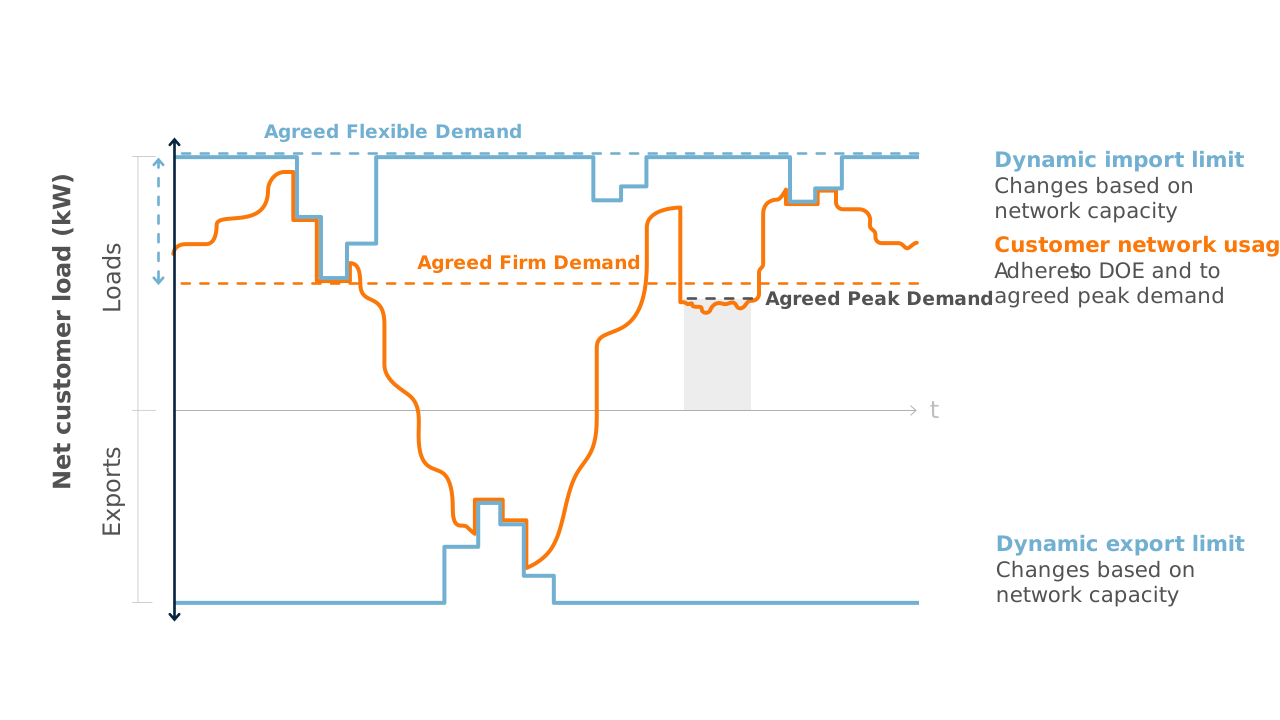
Flexible export limits (flexible feed-in limits) specify the maximum power that a PV system is allowed to feed into the public power grid at any given time. Under normal grid conditions, participating customers can feed in power up to the maximum permitted level. If grid congestion occurs, the feed-in limits may be reduced accordingly.
In South Australia, customers participating in the flexible feed-in limits program can feed in up to 10 kW per phase. For customers who do not participate, however, a fixed feed-in limit of 1.5 kW per phase applies. This conservative limit serves to protect the grid from overload even under extreme conditions.
The following figure illustrates how flexible feed-in limits work:
April 7, 2026 – Ulm University of Applied Sciences
The project team and partners met to discuss the IEEE 2030.5 Utility Server, CSIP-AUS, and their integration into the German CLS and backend infrastructure. The agenda included a project presentation, updates from the project partners, coordination regarding the interfaces, and a technical workshop on interoperability and testing procedures. In addition, responsibilities were assigned, and the next steps for implementation were coordinated.
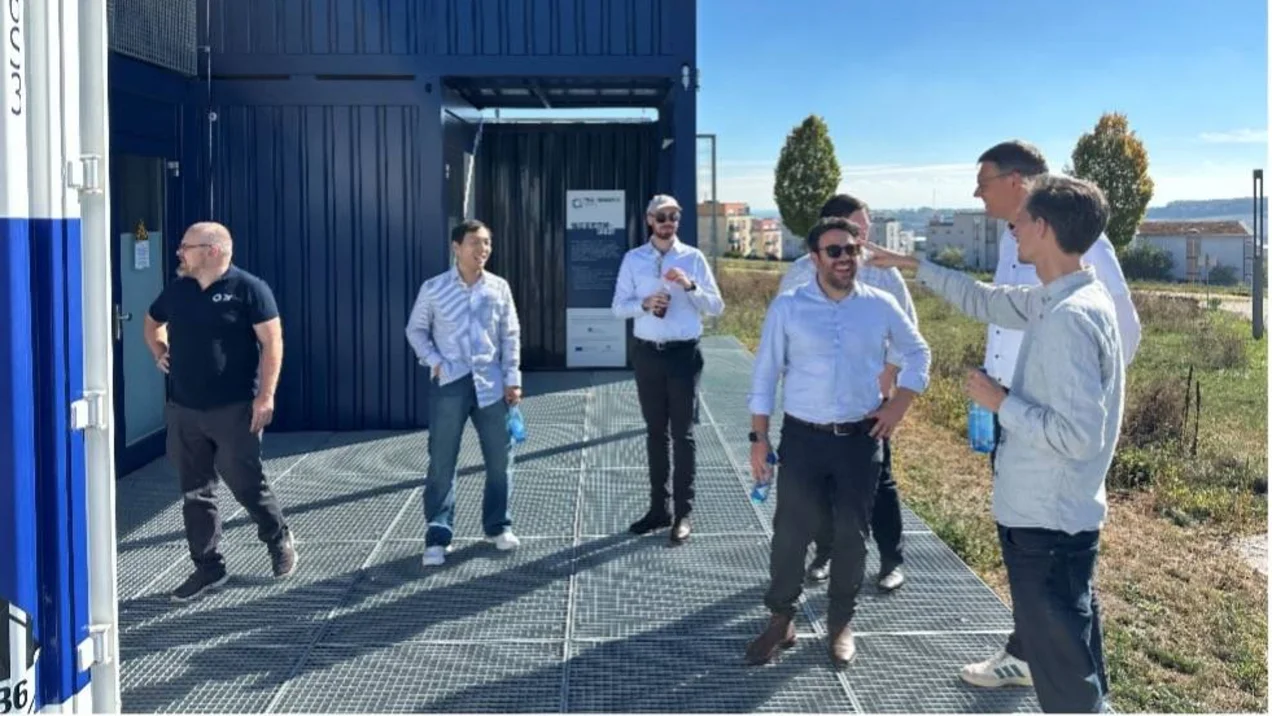
October 6–7, 2026 — Ulm University of Applied Sciences
SAPN and the German project partners exchanged experiences regarding Flexible Exports, system implementation, communication interfaces, and the next steps for integration and testing. The workshop combined insights from practical operations in South Australia with the specific requirements for implementation in Germany.
| Activity | Date | Project Contribution | Status and Resources |
|---|---|---|---|
| ETG Symposium on Highly Automated Grid Operation 2026 | May 6–7, 2026 | Concept for integrating the South Australian control solution into the German smart meter infrastructure | Poster available |
| IEE PES ISGT Europe 2026 | October 20–23, 2026 | Comparison of the German and South Australian control system rollouts | Paper and presentation available |
| 15th Smart Grids Congress Baden-Württemberg 2026 | December 1, 2026 | Project presentation and dialogue with stakeholders in the German control system rollout in Baden-Württemberg | Booth in preparation |
| FLEXSolar-BW and SAPN Webinar | TBD | Fundamentals of flexible power injection, operational experience, and implementation in Germany | Webinar in preparation |
| Future Power Grids Conference, Berlin 2027 | January 26–27, 2027 | Comparison and combination of German and South Australian DER control architectures | Presentation in preparation |
| E-world Essen 2027 | February 18, 2027 | Control Instead of Capping: What Germany’s citizen-led energy transition can learn from South Australia – Insights from FLEXSolarBW | Presentation at the Future Forum on February 18, 2027, at 10:00 a.m. in preparation |
| CIRED Stockholm 2027 | June 14–17, 2027 | Architectural and technical aspects of the approach developed in the project. | Abstract submitted; feedback pending. |
Would you like to learn more about flexible export limits, discuss the rollout of the German control system, or get involved in the project?
Please contact us.
Project Initiator
Ulm University of Applied Sciences – Smart Grids Research Group
Email: gerd.heilscher(at)thu.de
Project Manager
Ulm University of Applied Sciences – Smart Grids Research Group
Email: zhiyu.lu(at)thu.de