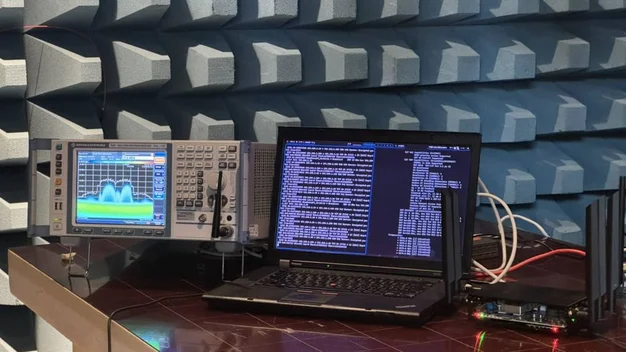

FSWI stands for ‘Fail Safe Wireless Interface’ and describes the development of a novel radio-based data interface for industrial automation. The aim of the project is to develop a wireless communication solution that meets the highest standards of availability, reliability and short cycle times, and is therefore also suitable for safety-critical applications.
The development of FSWI is intended to provide an alternative to today’s wired communication systems. The solution is based on cost-effective wireless technologies utilising licence-free frequency bands and readily available wireless modules. This paves the way for the future use of high-performance wireless communication in demanding industrial applications.
The project is being carried out by the Ulm University of Applied Sciences (THU) at the Institute of Communications Technology, led by Prof. Dr Roland Münzner and his research team, in collaboration with the participating project partners. The THU is contributing its expertise in the fields of radio communication, system analysis and protocol development.
Secure Wireless Communication for the Future of Automation
In industrial automation, there is a growing need for flexible and wireless communication solutions. At the same time, safety-critical applications place particularly high demands on the availability and response speed of data transmission. To date, these requirements can often only be met by wired systems.
The FSWI is pursuing an approach to further develop wireless communication so that it can be used as a so-called “black channel” in safety control systems. In this context, the focus of the safety function is not on the wireless connection itself, but rather on the reliable and verifiable transmission of safety-relevant information.
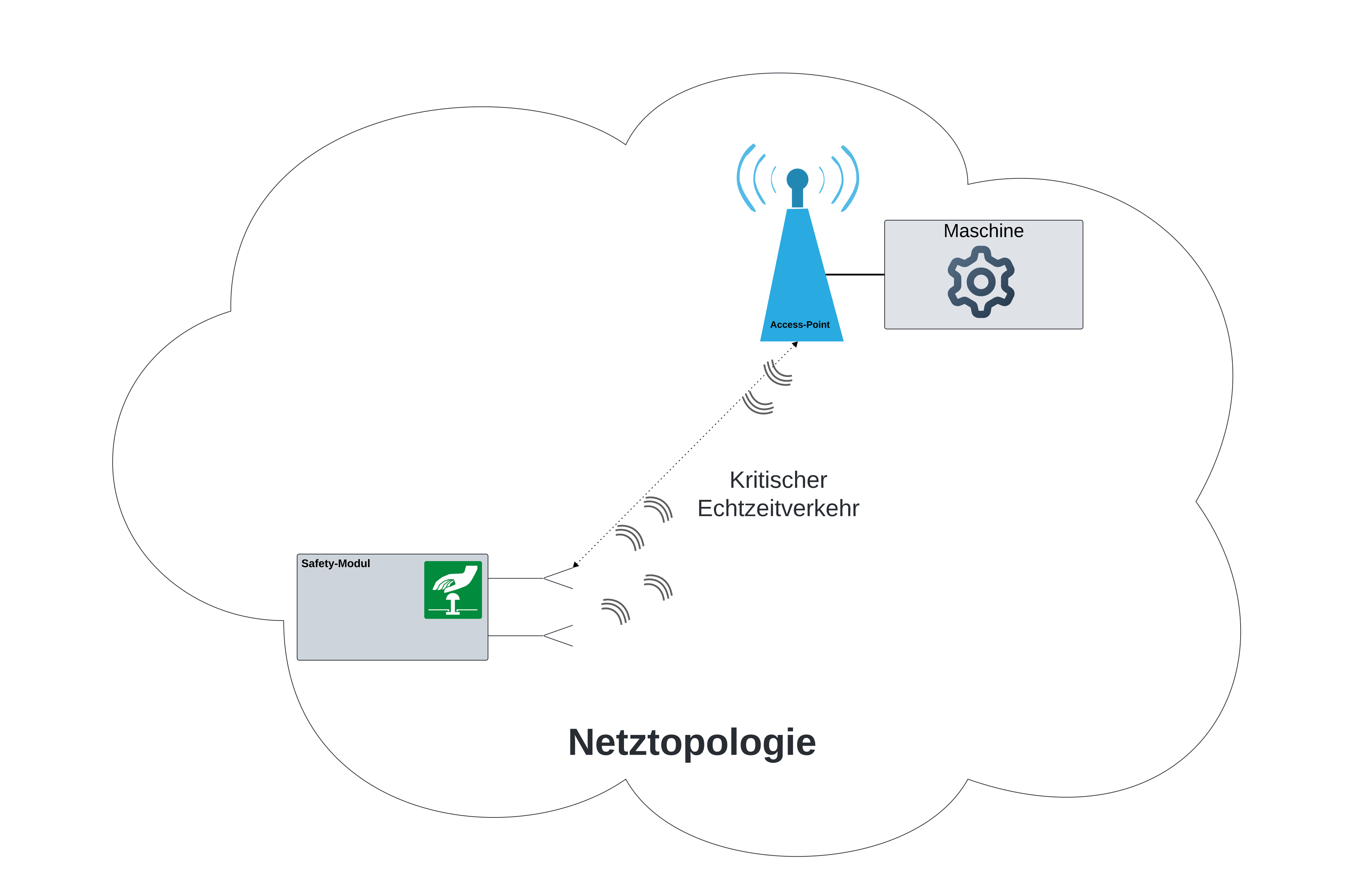
Research Focus Areas
A key component of the project is the scientific investigation of suitable wireless technologies and communication methods. To this end, THU is analyzing various wireless standards as well as the characteristics of the radio channel to determine the optimal technical foundation for the FSWI.
Building on this, the system architecture is being developed in collaboration with the project partners. To evaluate and optimize the system, a comprehensive simulation environment is being created that allows for a detailed examination of the FSWI’s behavior under various operating conditions. This enables the system’s performance, reliability, and potential limitations to be assessed at an early stage.
From Simulation to Practical Application
In addition to theoretical studies and simulations, the FSWI is evaluated through measurements and practical field tests. The combination of simulation, protocol analysis, and real-world testing enables a comprehensive evaluation of the developed wireless solution and lays the foundation for its reliable deployment in industrial automation systems.
Contribution of the University of Ulm
Ulm University of Applied Sciences plays a central role in selecting suitable technologies, developing the system architecture, and providing scientific validation of the overall system. By combining radio channel analysis, simulation, and detailed protocol and standards analysis, the University of Ulm is making an important contribution to the development of secure and high-performance wireless communication for future automation applications.