
THU research group tests sonar technology to detect ghost nets at sea for the first time
Field trial in Portugal
The Microtechnology and Sensor Technology Research Group at Ulm University of Technology (THU) has been working on methods for underwater imaging for around a year. A particular focus is on the detection of so-called ghost nets – known in technical jargon as ‘Abandoned, Lost or otherwise Discarded Fishing Gear’ (ALDFG). This lost or discarded fishing gear poses a threat to marine ecosystems worldwide. Using modern sonar technology, the team is developing methods to reliably detect and document such objects underwater.
The research group led by Prof. Dr.-Ing. Thomas Walter and PhD student Sabrina Lennartz has now reached an important milestone in Peniche, Portugal. The trip was prompted by a symposium organised by the Swiss association Redes Fantasma in Lisbon, which also contributes to the funding of the research project at the THU. Together with the Portuguese Ocean Patrol Association, the initiative brings together people who are actively committed to combating marine pollution caused by litter and ghost nets.
For the tests in Peniche, squid pots and a fishing net were deliberately sunk in the harbour. The researchers then mapped the objects using a SideScan sonar, which is aligned orthogonally to the boat’s trajectory, enabling large areas to be scanned and examined simultaneously at high resolution. The team was supported by a local fisherman, who provided his boat, his expertise and additional sonar equipment. The various experiments demonstrated how objects near the seabed differ from those in the water column, and identified the specific characteristics of the various types of fishing gear. These findings form the basis for future research aimed at improving the automatic detection and classification of ghost nets using imaging sonar technology and algorithms.
“Many of our measurements take place in pools, where, although highly controlled experiments can be carried out, conditions are only partially realistic. That is why such measurements in the sea or in larger lakes are of great importance to us. In Peniche, we were able to test parts of our sensor system under real-world conditions for the first time and collect data. Furthermore, the knowledge and experience of our supporting partners enabled us to quickly familiarise ourselves with the challenges of underwater imaging in open waters.”
The insights gained are intended to help detect ghost nets and other underwater objects more quickly and reliably in future – thereby contributing to the protection of marine ecosystems.
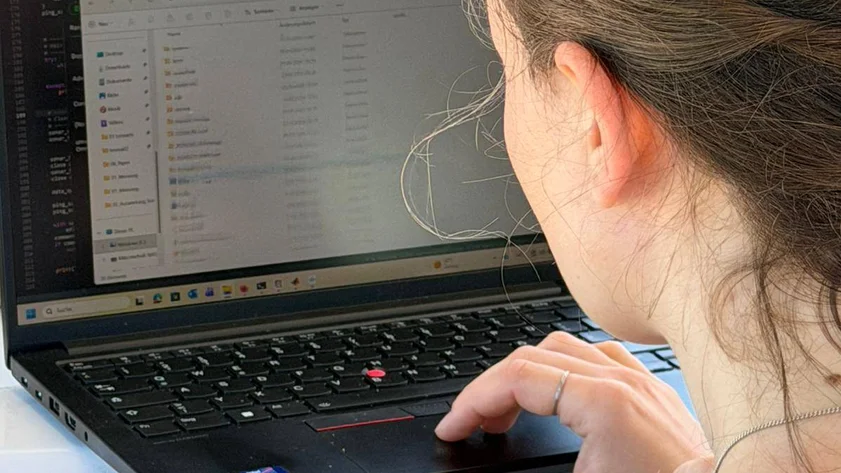
Cover image: PhD student Sabrina Lennartz during a field test in Portugal, source: THU