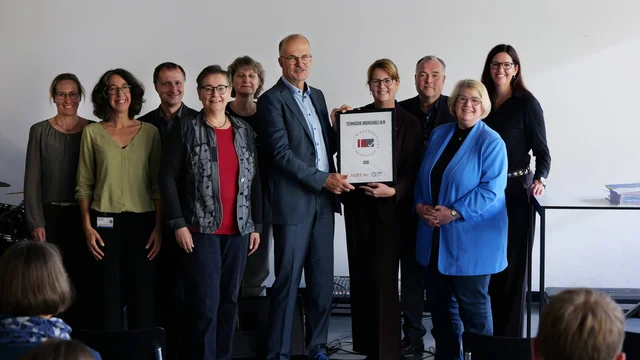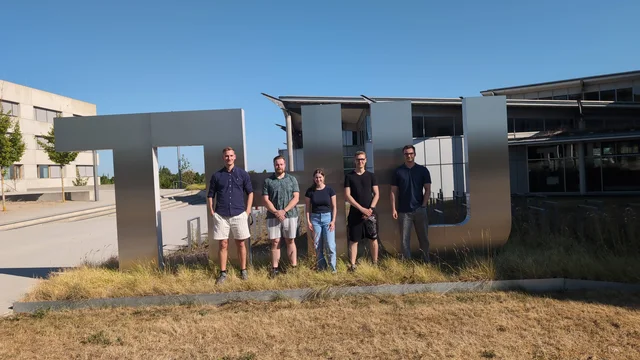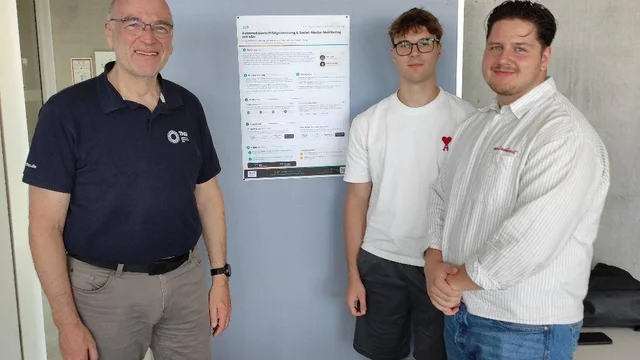

Ulm University of Applied Sciences has received system accreditation
On 25 June 2026, the Accreditation Council decided to award the Ulm University of Applied Sciences (THU) the system accreditation seal. Bachelor’s and Master’s degree programmes must be accredited in Germany. With system accreditation, the THU has been granted the right to award the Accreditation Council’s seal to its own degree programmes. This enables the THU to organise quality assurance in a tailored and flexible manner, whilst at the same time ensuring that its degree programmes meet high quality standards.
The Accreditation Council, as the central institution in Germany for quality assurance in higher education, has, through its decision, entrusted the THU with far-reaching responsibility for quality. In concrete terms, this means that the THU has established and further developed its own internal quality management system so effectively that it can accredit its degree programmes itself.
For students, this means that THU degree programmes are continuously assessed for their quality and sustainability with the involvement of independent external experts. THU itself now guarantees lasting quality standards for all its degree programmes.
“This is a milestone for us,” says Rector Prof. Dr Volker Reuter, acknowledging the success as the result of a long-standing collaborative process: “In recent years, the preparations for this day have demanded a great deal from us in many areas of the university and have instilled in us a new awareness of quality culture as a team effort. I am therefore all the more pleased that, with the Accreditation Council’s decision, we have received a strong and independent endorsement that our commitment is on the right track for sustainable study at the THU.”
Last year, the accreditation agency AQAS conducted a thorough review, working with independent experts on site in Ulm to assess the extent to which the THU meets the legal criteria for an effective quality management system. Through random checks on individual degree programmes, an assessment was also made as to whether the THU is capable, from an objective internal perspective, of dealing with critical issues – whether from the perspective of students, staff, lecturers or assessors – and to implement targeted solutions for quality assurance.
Prof. Dr Annika Halder, Chair of the THU’s internal accreditation committee, looks back positively on the collaboration within the established QM system: “I was particularly impressed by the openness with which my colleagues embraced the evaluation process. It was never about presenting a perfect image to the outside world, but about honestly examining where we are already well positioned and where we can still improve. For me, it is precisely this willingness to engage in critical self-reflection that defines effective quality management.”
“The preparations for system accreditation have forced us, over the last few years, to engage more deeply with quality standards ourselves. Now there was no longer any loophole to claim that ‘other’ external programme assessors bore the responsibility and that we simply had to prepare very well to answer their questions. Now we were able to apply our greatest strength as engineers in a targeted way: taking responsibility for developing resource-efficient solutions to problems and authentically exemplifying what we also wish to teach our students,” says Prof. Dr Jens Bihr, Vice-Rector for Studies and Teaching. “A seal of approval like this from the Accreditation Council conveys even more: the THU really does live up to its reputation. We are delighted with this success.”
From the students’ perspective, AStA Chair Moritz Ummenhofer also welcomes the Accreditation Council’s decision: “For us, system accreditation means, above all, greater transparency and more opportunities to have our say. If quality processes are managed directly at the THU in future, we as students will be able to contribute our perspectives earlier and more easily, because the lines of communication are shorter. We see this as a great opportunity to ensure that issues such as the manageability of the degree programme, mental health challenges during studies, the design of examinations and the further development of teaching quality are taken into account even more closely.”