
THU: First successful doctoral examination at the university’s own doctoral centre
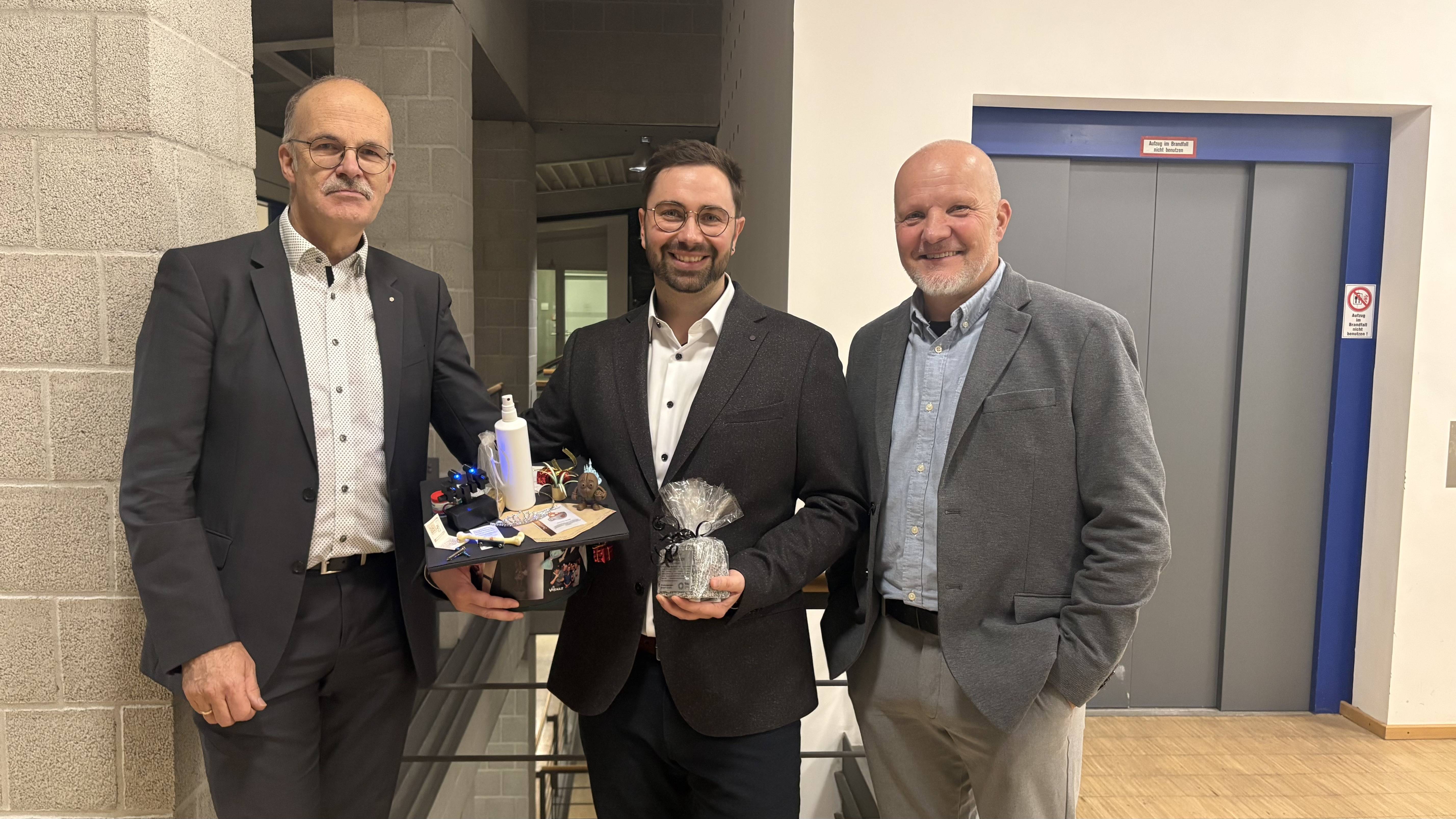
A significant milestone for Ulm University of Applied Sciences (THU): for the first time, a PhD candidate from the university has successfully passed their examination at the Doctoral Centre of the Universities of Applied Sciences in Baden-Württemberg.
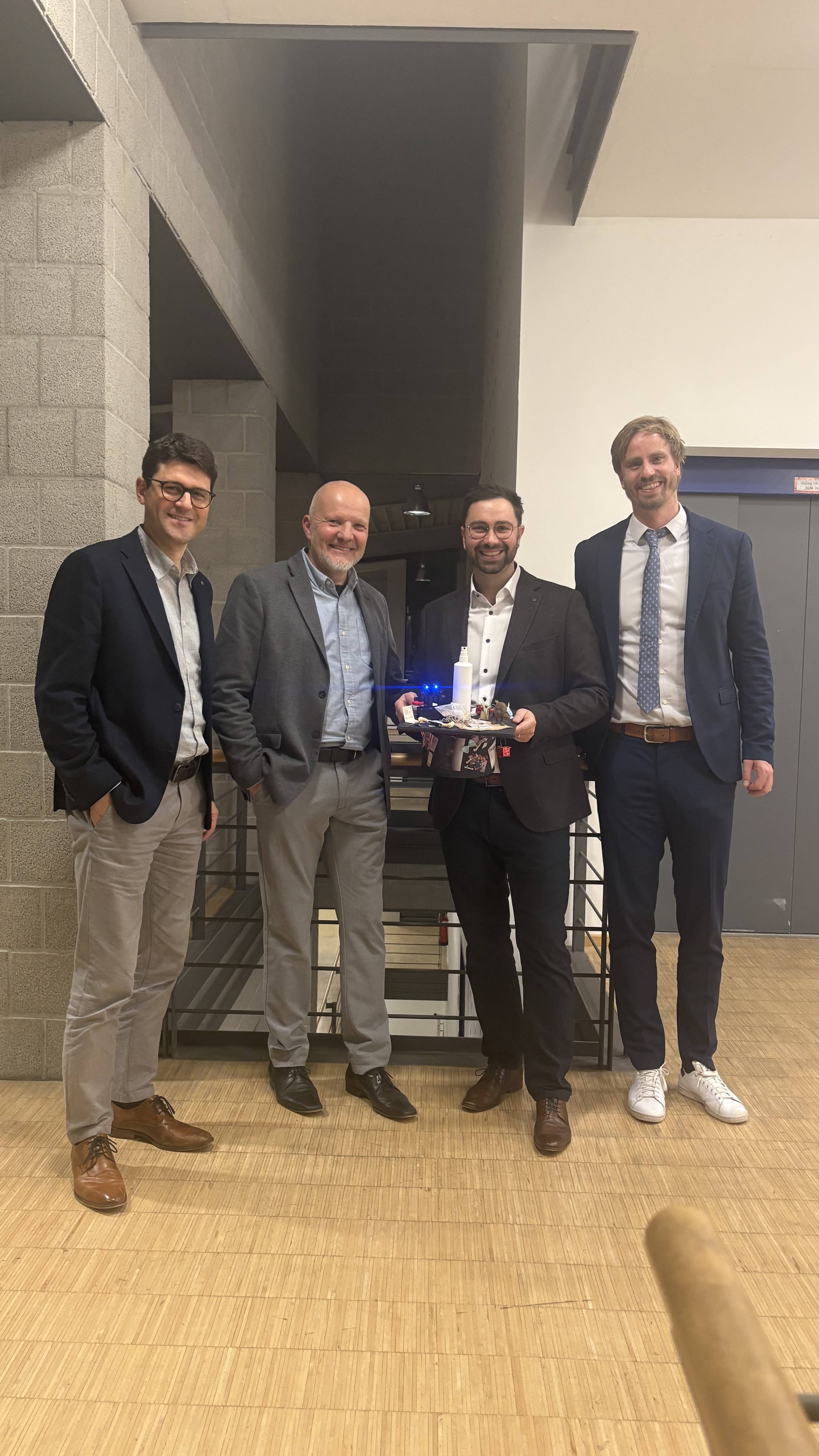
Since 2022, 24 Universities of Applied Sciences (HAW) in Baden-Württemberg – including the THU – have been operating a doctoral centre where professors from the HAW with a proven track record in research are authorised to award doctoral degrees independently. The THU now had cause to celebrate: on 25 November 2026, Christian Halbauer became the first doctoral candidate at the Technical University of Ulm to successfully complete his doctoral examination at the Doctoral Centre – and with the distinction of magna cum laude. The supervisor and first examiner in this process was Prof. Dr Felix Capanni, recipient of the City of Ulm’s Science Prize in 2022.
In his cumulative doctoral thesis entitled ‘Biomechanical analysis of the angle-stable PHILOS™ Long implant system with regard to straight and helical plate osteosynthesis for the treatment of a proximal humeral shaft fracture using physiological implant system testing and bone healing simulation’ Christian Halbauer investigated the biomechanics of various implant designs for the treatment of upper arm fractures. In doing so, he compared straight and helical plate osteosynthesis in terms of their mechanical load-bearing capacity and their influence on bone healing. Using experimental tests and computer-aided simulations, he was able to demonstrate that the helical implant variant also exhibits high stability under physiological loads and enables complete fracture healing.
The research findings were published in three scientific papers in which he was the first author and provide valuable insights for the further development of implant systems for the treatment of bone fractures.
“This work exemplifies how application-oriented research contributes to a better understanding of medical issues and yields new insights for clinical practice. The combination of experimental studies, stress simulations and bone healing simulations underlines the scientific and interdisciplinary nature of the work,” explains Prof. Dr Felix Capanni.
The oral doctoral examination took place at the THU. The examination board comprised Prof. Dr Steffen Willwacher (Chair, Offenburg University of Applied Sciences), Prof. Dr Felix Capanni (first examiner, THU) and Prof. Dr-Ing Michael Lauxmann (second examiner, Reutlingen University of Applied Sciences).
For the PhD candidate, this qualification marks a special achievement: “My PhD was an exciting and challenging period during which I was able to grapple with complex scientific questions as part of the research project. I found it particularly motivating to use biomechanical analyses to investigate a clinically relevant topic in a practical way, thereby contributing to a deeper understanding of the biomechanical relationships involved in fracture management,” says Christian Halbauer.
“This first successfully completed PhD at the Doctoral Centre, operating under the umbrella of the HAW’s so-called Doctoral Association, marks an important milestone in the development of the THU. It underlines that, in addition to the cooperative doctoral programmes we have successfully established over many years in collaboration with partner universities, we are also able to offer our early-career researchers attractive prospects independently within the THU’s key areas of applied research,” emphasises THU Rector Volker Reuter.
A look at the other doctoral projects shows that this is only the beginning: currently, over 50 young researchers are working on their theses at the THU, 17 of whom are at the Doctoral Centre.